
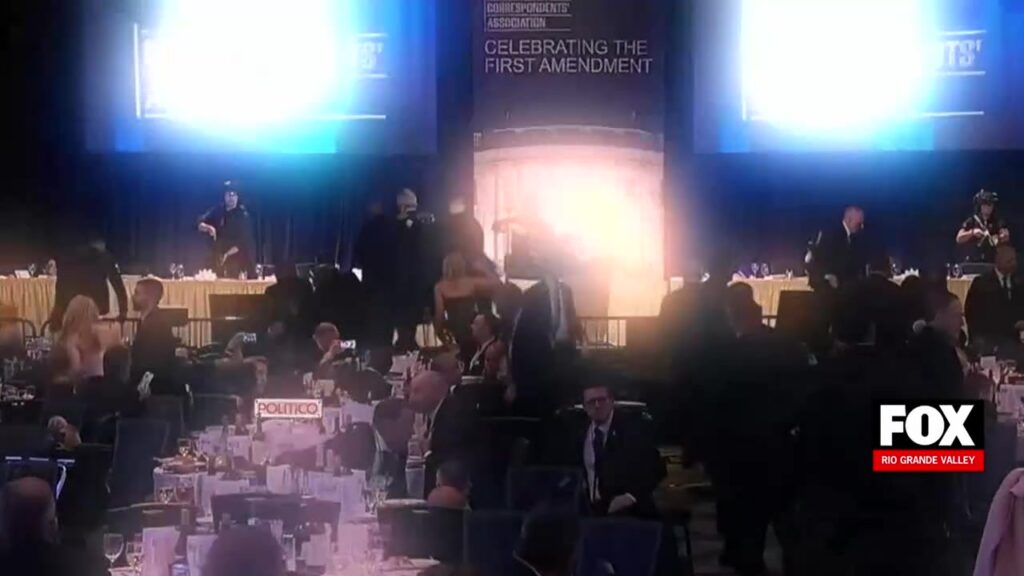
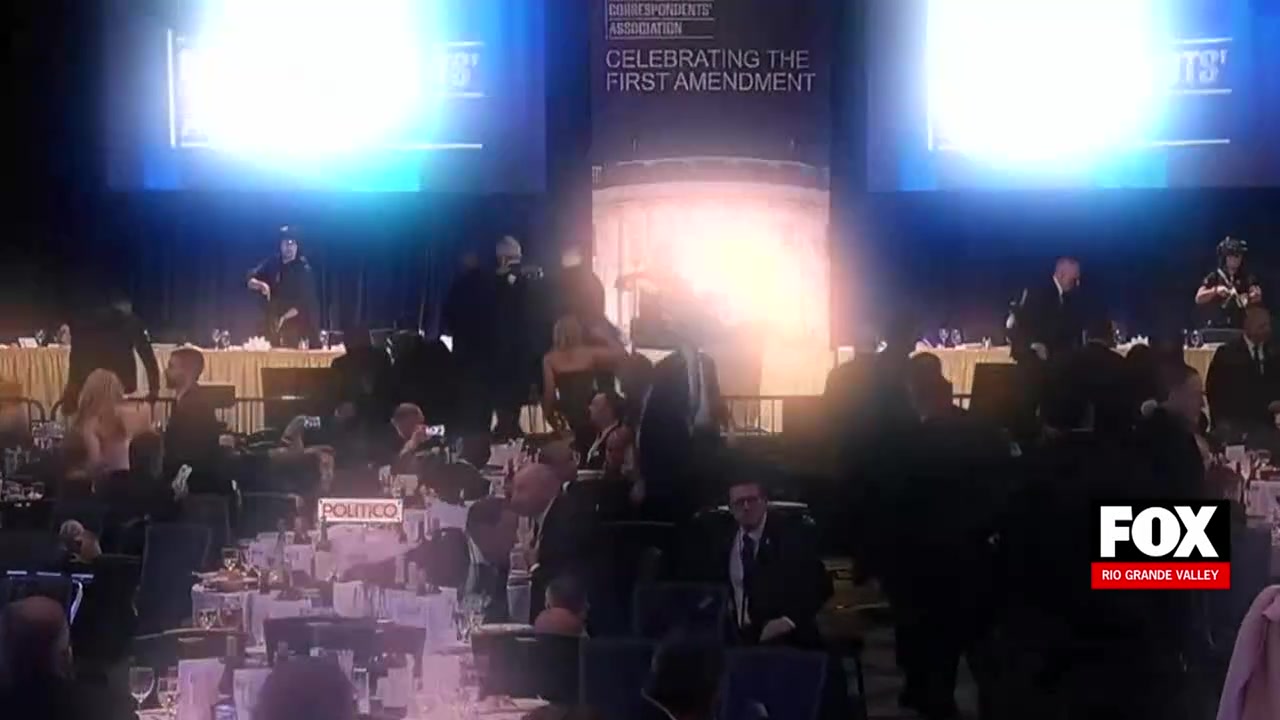
The White House Correspondents’ Dinner, an annual event intended to celebrate the free press and provide an opportunity for journalists and politicians to engage in lighthearted conversation, was violently disrupted Saturday night. Held at the Washington Hilton ballroom, the prestigious gathering attracted more than 3,000 attendees, including President Trump, the First Lady, cabinet members, and some of the nation’s most notable figures in media and politics. However, what was anticipated as a night of humor and camaraderie quickly descended into chaos when gunshots rang out in the hotel’s lobby.
The incident sparked immediate panic throughout the venue. Guests scrambled for cover, diving under tables or rushing toward emergency exits. Despite the sudden terror, swift action by law enforcement and the hotel security prevented any loss of life among the attendees. No civilians were injured, though a Secret Service agent sustained a gunshot wound but was saved by wearing a bulletproof vest. The quick evacuation of the President, the First Lady, and the rest of the cabinet to safety at the White House was accomplished without incident, ensuring the principals were unharmed.
The shooting shocked the nation’s capital and raised urgent questions about security at high-profile events. As investigators continue to piece together the sequence of events and motives, authorities emphasize the professionalism and preparedness of the security teams who managed the crisis under pressure.
Details of the Incident and Security Response
The gunman was identified as 31-year-old Aline from Torrance, Gulf Coast. He reportedly entered the Washington Hilton and managed to infiltrate the hotel lobby where the dinner was underway. Surveillance footage shows Aline moving hastily through security checkpoints before assembling firearms and knives. Authorities report that the suspect was armed with a shotgun, a handgun, and multiple knives, raising significant concerns about what might have occurred had he not been intercepted.
Hotel security personnel and law enforcement officers quickly tackled and arrested Aline, preventing the assailant from reaching the ballroom area where the dinner was taking place. The initial shots came from a distance in the hotel lobby, which contributed to the protection of the ballroom guests. The rapid response by Secret Service agents and local police was crucial in averting greater tragedy.
Following the arrest, the FBI and local police swarmed the suspect’s residence in Torrance to conduct thorough searches. Officials are working to understand the suspect’s background, potential affiliations, and motivations. Authorities are also investigating whether the attack was planned extensively or an impromptu act of violence.
Security Challenges and Heroism
One crucial factor mitigating the impact of the shooting was the bravery and resilience of the security forces. A Secret Service agent was wounded during the pursuit but sustained non-life-threatening injuries thanks to protective gear, including a bulletproof vest. This agent’s survival underscores the level of preparedness present at such high-stakes events.
White House officials confirmed that all key figures— including the President, the First Lady, and cabinet members— were safely evacuated without harm. The suspect is currently in custody, with no indications of accomplices at this time. The investigation includes vetting the assailant’s digital footprint, social media presence, and any possible links to extremist groups. Authorities are also reviewing event security protocols to identify areas for improvement.
Implications for Future Events and National Security
The attack at the White House Correspondents’ Dinner reverberates beyond the immediate incident, intensifying the national discourse about gun control laws, mental health intervention, and the balance between maintaining an open political culture while ensuring security at public events. The incident comes amid growing concerns regarding threats to elected officials, journalists, and public venues.
Federal officials have pledged to implement stricter security measures for future gatherings, blending advanced screening technology, enhanced coordination between local and federal agencies, and revised emergency response plans. President Trump has announced plans to reschedule the dinner within the next month, emphasizing a commitment to preserving the tradition while ensuring safety.
Washington insiders anticipate broad bipartisan discussions on how to protect both accessibility to democratic institutions and the safety of attendees at politically significant events. The White House Correspondents’ Dinner symbolizes not only the relationship between the press and the presidency but also the fundamental American values of free speech and democracy, making security at such functions paramount.
Additional Resources
For continuous updates on this and related investigations, the public is encouraged to visit the FBI Seeking Information page. For broader information on event security and national preparedness, the Department of Homeland Security Event Security resources provide valuable insights.


Join the Conversation
Share a local perspective, ask a follow-up, or add helpful context. Comments are moderated before they appear.