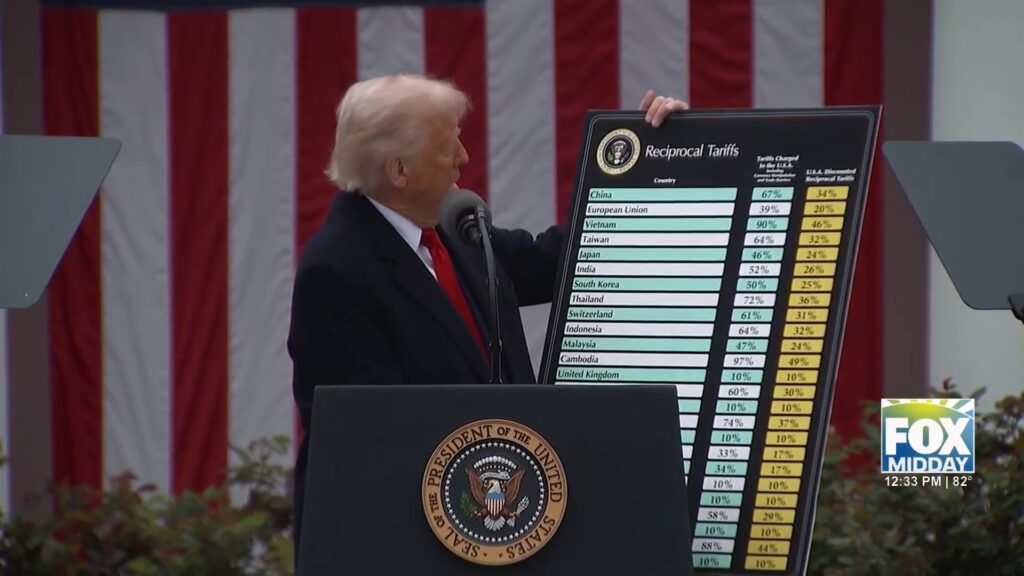
In a decision that has rippled through the economic and political landscape, the United States Supreme Court ruled 6-3 against former President Donald Trump's tariffs, declaring them unconstitutional. This monumental ruling strikes at the core of Trump's economic platform, which aimed to bolster American industries by imposing tariffs on various countries, citing national security concerns. These measures, originally justified under the International Emergency Economic Powers Act, have now been nullified by the highest court, changing the dynamics of U.S. trade policy and executive power.
The Supreme Court's decision was based on the argument that the president had overstepped his authority by implementing these tariffs without explicit legislative approval. Chief Justice John Roberts, writing for the majority, stressed that the executive branch requires distinct authorization from Congress to justify such significant economic actions. This ruling not only impacts the tariffs directly but also sets a precedent for how far presidential power can extend regarding economic affairs.
Impact of the Ruling
The reversal of these tariffs has significant implications for international trade and domestic businesses. The policies, which were officially rolled out last April on Liberation Day, had already imposed added costs on countless U.S. businesses and consumers by increasing the price of imported goods. With the tariffs now invalidated, there could be a more predictable trade environment, fostering improved relations with affected countries and a potential decrease in costs for American consumers.
This significant decision witnessed an unusual alliance on the bench, with Chief Justice Roberts teaming up with conservative Justices Gorsuch and Amy Coney Barrett, alongside the liberal justices, forming a majority. This coalition underscores the non-partisan nature of the court's interpretation of constitutional overreach in this instance, reflecting a broader agreement on the limits of presidential power.
Concerns and Implications
While the court has clearly defined the limits of executive power in imposing tariffs, the ruling leaves some critical issues unresolved. Notably, it remains undetermined whether the U.S. Treasury Department will be obligated to provide refunds to American companies that have paid millions in these tariffs. This uncertainty presents potential challenges for businesses seeking restitution and could lead to further legal battles or legislative action.
Additionally, the decision sparks discussions about the extent of presidential authority in scenarios involving national emergencies. Although the ruling curtails the unilateral imposition of tariffs, it does not eliminate the possibility of the president employing other economic measures during declared emergencies, provided these are sanctioned by Congress. This introduces a nuanced perspective on checks and balances, emphasizing the importance of legislative oversight in economic policymaking.
Additional Resources
For a deeper understanding of the implications of this Supreme Court ruling and its impact on U.S. trade policy, visit the official website of the United States Supreme Court at supremecourt.gov.