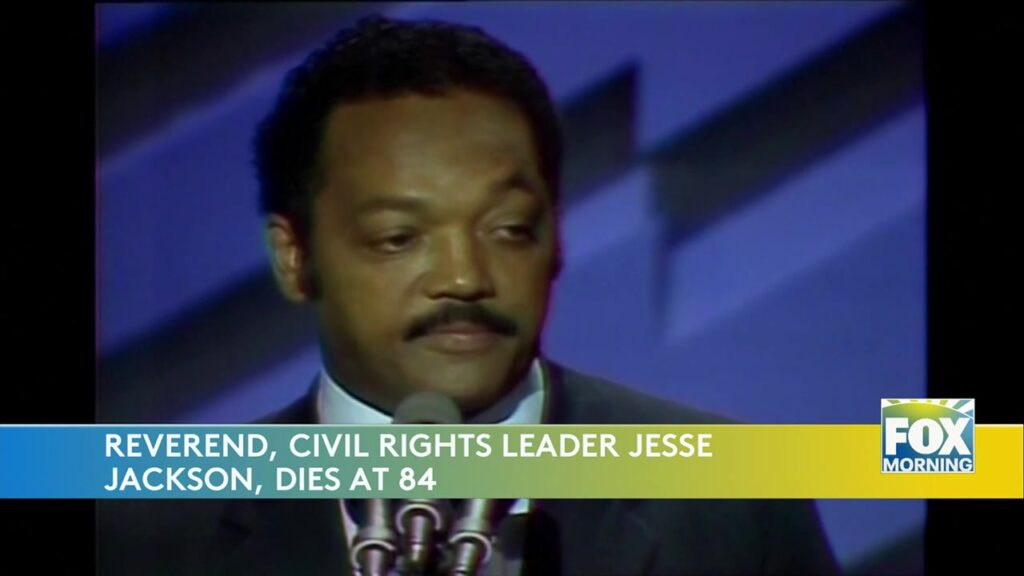
The world has bid farewell to a towering figure in civil rights advocacy with the passing of Reverend Jesse L. Jackson. Jackson died at his home at the age of 84, surrounded by loved ones, leaving behind a legacy of social justice and equality. He was a pivotal leader whose impact on civil rights and social activism reverberated across decades and continents.
Born on October 8, 1941, in Greenville, South Carolina, Jesse Jackson grew up in the segregated South. His early experiences with racial inequality in the United States sowed the seeds of a lifelong commitment to eradicating systemic barriers. He became a close aide to Dr. Martin Luther King Jr. and played a crucial role in various civil rights campaigns. Jackson's unwavering dedication to advancing civil rights made him a beacon of hope for the oppressed and underserved communities around the world.
A Life of Service
Jackson was deeply influenced by Dr. Martin Luther King Jr., becoming one of his most ardent proteges. After the assassination of Dr. King in 1968, Jackson continued the fight for equality. He founded Operation PUSH (People United to Save Humanity) in 1971, aimed at improving the economic standing of African Americans and advocating for broader social reform. His leadership extended far beyond American borders, as he became an international voice for social justice.
A charismatic orator, Jackson inspired millions with his speeches and actions. His famous "I Am Somebody" speech galvanized communities to recognize their worth and demand respect, equality, and justice. Through his words and deeds, Jackson effectively broadened the reach of the civil rights movement, emphasizing issues like economic empowerment, educational opportunities, and voter registration efforts.
Contributions to Society
Jesse Jackson’s contributions to society were profound and multifaceted. He tirelessly fought for the expansion of voting rights and played a pivotal role in several voter registration drives across the United States. These efforts were instrumental in increasing voter turnout, particularly among African American communities.
In the realm of education, Jackson advocated for educational equity, pushing for policies that would dismantle the enduring racial disparities present in American educational institutions. His commitment to healthcare reform was equally strong. He argued that access to healthcare is a fundamental right, not a privilege, and worked to bridge gaps in healthcare accessibility for marginalized populations.
Political and Social Impact
Jackson became a household name in the 1980s through his historic presidential campaigns. As a two-time presidential candidate in 1984 and 1988, he was the first African American to make a serious bid for the presidency, breaking barriers and paving the way for future African American candidates, including Barack Obama. His campaigns emphasized peace, jobs, and justice, bringing issues of racial and economic inequality to the forefront of national political discourse.
Apart from his political endeavors, Jackson was also actively involved in international diplomacy. He played a vital role in securing the release of hostages and negotiating peace agreements in conflict zones, further demonstrating his commitment to non-violence and human rights. His work received global recognition, embodying the essence of servant leadership, as described by his family upon his passing.
Health Challenges
In his later years, Jesse Jackson faced significant health challenges. Diagnosed with a rare brain disorder known as Parkinson's Disease, he experienced difficulties with speech and mobility. Nevertheless, his resolve remained unshaken, and he continued to advocate for social justice until his final days. His persistence in the face of adversity served as an inspiration to many.
Jackson's legacy is immortalized not only in the legislative changes and cultural shifts he inspired but also in the countless lives he touched with his unwavering commitment to justice and equality. His passing is mourned by many, but his spirit lives on in the continuous fight for civil rights.
Additional Resources
For further reading on the contributions of Jesse Jackson, visit The Martin Luther King Jr. Research and Education Institute.