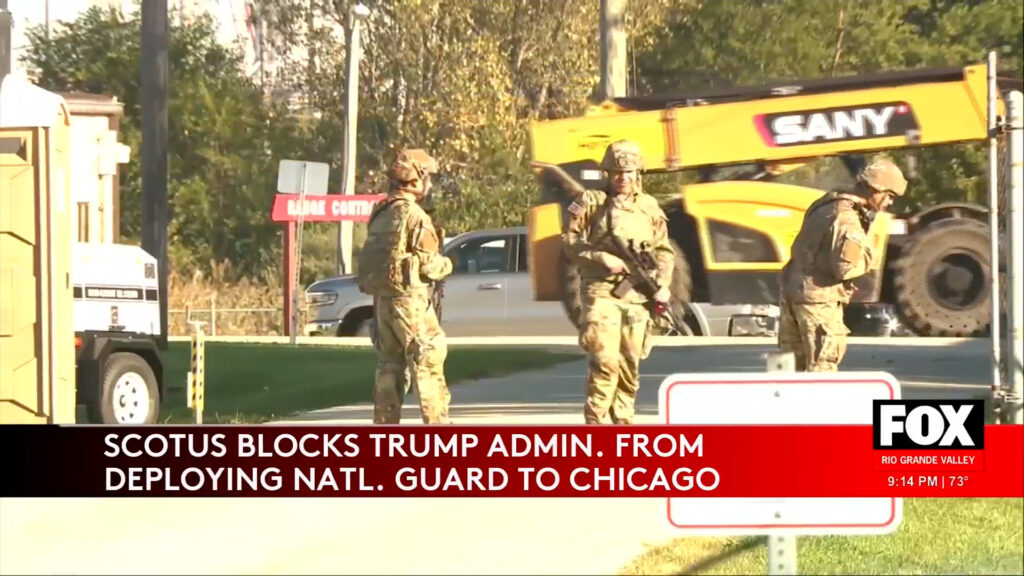
The Supreme Court decision has made headlines by refusing to allow the Trump administration's deployment of National Guard troops to Chicago, marking a significant moment in the ongoing political and legal battles surrounding federal immigration law enforcement. This decision highlights the intricate balance of power between federal and state jurisdictions and raises questions about the extent of executive power.
The Trump administration argued that the deployment of National Guard troops was necessary to protect federal personnel and property from what they described as violent resistance against the enforcement of federal immigration laws. However, both a district judge and an appeals court had previously blocked this move, citing concerns about overreach and the potential for escalation in the Windy City.
Supreme Court decision: Supreme Court's Impact on National Guard Deployment
The Supreme Court's ruling not only prevents the immediate deployment of National Guard troops in Chicago but also sets a precedent for similar cases in the future. The administration's emergency request was denied, reflecting the Court's stance on maintaining a strict separation of powers and protecting state rights against federal intervention without clear justification.
This decision comes at a time when relations between federal authorities and city officials in Chicago are tense, with immigration laws and their enforcement being a central point of contention. The ruling underscores the judiciary's role in interpreting the Constitution and its amendments, particularly in cases involving the deployment of military forces within U.S. borders.
Joyce Betty's Lawsuit and Its Implications
Simultaneously, Democratic Congresswoman Joyce Betty has initiated a lawsuit challenging the addition of President Donald Trump's name to the Kennedy Center. Betty, an ex officio trustee of the center, claims that the board of trustees exceeded their authority by voting to include Trump's name.
The new signage at the Kennedy Center, installed shortly after the board's decision, has sparked debate over the legality and appropriateness of such a move. While some legal experts argue that the board's decision may indeed be unlawful, it remains uncertain whether an individual, such as Betty, would have the standing to contest this decision in court.
This lawsuit adds another layer to the complex legal landscape surrounding the Trump administration, particularly in how public institutions and federal powers are managed and challenged.
Additional Resources
For more information on the Supreme Court's role and decisions, visit the official website of the Supreme Court of the United States.