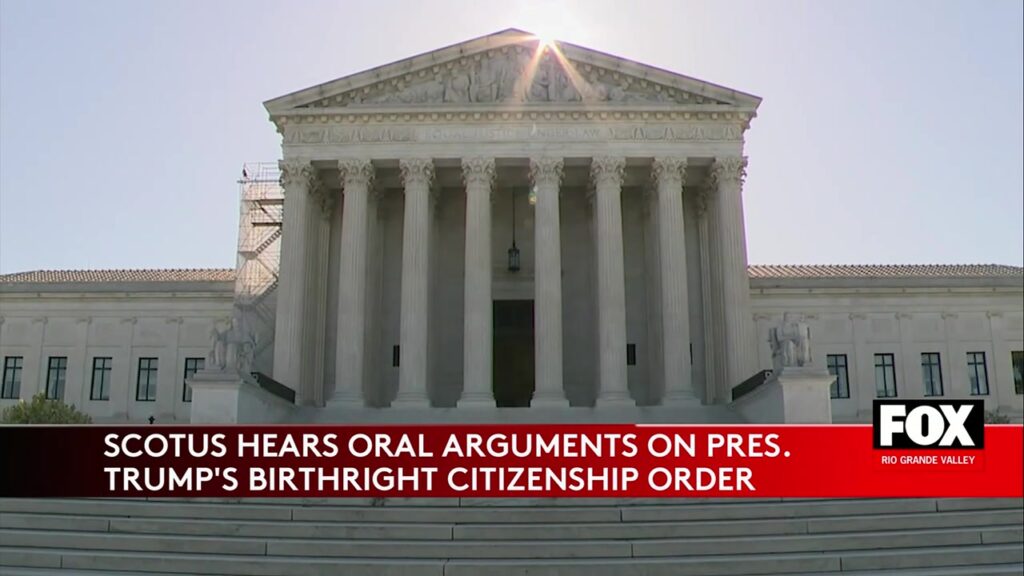
Today marks a pivotal moment in U.S. history as the Supreme Court deliberates on the legality of President Trump's executive order to limit birthright citizenship. The order has sparked heated debates across the nation as it seeks to interpret and potentially alter the long-controversial 14th Amendment of the U.S. Constitution. Trump's initiative is an attempt to revoke automatic citizenship for children born in the United States to parents without legal residency status.
This is a landmark case not only because of its implications for immigration law but also due to the unprecedented attendance of a sitting U.S. President at a Supreme Court hearing. President Trump’s presence underscores the weight and complexity of the issue at hand. With security measures notably heightened, the fact that the President attended the hearing in person reflects the administration's commitment to this legal challenge.
The Constitution Under the Microscope
The 14th Amendment, ratified in 1868, was initially crafted to grant citizenship to former slaves and anyone born in the United States. The amendment’s Citizenship Clause is at the heart of this debate, as it has traditionally been interpreted to grant automatic citizenship to all individuals born on U.S. soil. Trump’s executive order raises significant constitutional questions that challenge this long-standing interpretation. Supporters of the order argue that the framers of the 14th Amendment likely did not foresee its application to children of non-citizens.
Background to a Controversial Order
This executive order is seen as a defining move in the Trump administration’s broader immigration policy agenda. Ever since the President announced his intention, it has stirred debate across the political spectrum. Proponents, including some constitutional scholars and political figures, assert it is within presidential rights to interpret the amendment in context with current immigration trends. Opponents, meanwhile, argue that such an executive action undermines the Constitution and could set dangerous precedents regarding civil liberties and citizenship rights.
The controversy also lies in interpretation: is birthright citizenship an absolute constitutional right, or should it be subject to modern-day legislative scrutiny? This question underpins the broader social and political discourse, refueling discussions on immigration reform and national identity.
Speculations Adorn the Era-Defining Ruling
The Supreme Court's decision, expected by July, is poised to become a historic interpretation of the Constitution. Because this subject touches on principles established over a century ago, any ruling will inevitably influence future policymaking and potentially set a precedent for how constitutional amendments are to be interpreted amid evolving societal landscapes.
Observers speculate on how this decision might impact other rights currently taken for granted and what it could mean for millions of individuals who may be directly affected by a change in the citizenship landscape. The outcome may redefine the legal framework of birthright citizenship and either uphold or transform a cornerstone of American civil rights.
Additional Resources
For additional information on the 14th Amendment and its legal interpretations, the U.S. Government Publishing Office offers resources at govinfo.gov. This site provides access to a variety of government documents and interpretations relevant to those studying U.S. constitutional law and its historical applications.