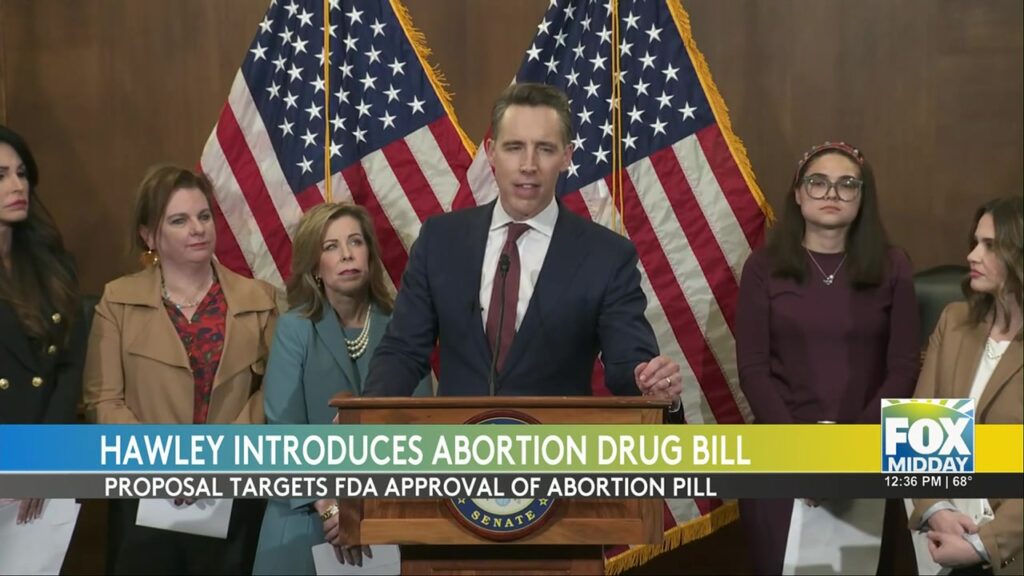
The controversial issue of abortion continues to ignite passionate debate across the United States, as recent legislative developments reveal significant shifts in the ongoing discussion around reproductive rights. Senator Josh Hawley of Missouri has recently proposed a new piece of legislation aimed at targeting FDA-approved abortion medications, adding another chapter to this highly charged issue. With this proposal, Hawley aims not only to reshape the landscape of reproductive healthcare but also to address what he describes as 'inherent dangers' associated with the abortion pill, mifepristone.
The legislative proposal introduced by Senator Hawley underscores broader societal conflicts over women’s reproductive rights, the scope of healthcare services, and governmental oversight. Attempting to withdraw FDA approval for mifepristone could impact many women's access to reproductive health options. Hence, this potential legislative change warrants a closer examination of its historical context, implications, public reaction, and possible future outcomes.
Introduction of the Safe Guardian Women from Chemical Abortion Act
Senator Hawley recently introduced the "Safe Guardian Women from Chemical Abortion Act" in the Senate, marking a significant move in his ongoing efforts to amend the current status of abortion medications. This legislation is a continuation of Hawley’s legislative efforts from the previous year. The aim is to revoke the FDA’s approval of mifepristone for abortion use, highlighting what the bill characterizes as serious adverse health events reported by women who have used the medication to terminate pregnancies.
Central to the act is the provision allowing affected women to seek legal action against drug manufacturers, thereby holding them accountable for what the bill terms as systematic misinformation regarding the drug's safety. This feature reflects a growing legislative trend towards ensuring corporate accountability in the pharmaceutical sector, emphasizing consumer protection.
Historical Context and Implications
The debate over mifepristone, the medication at the center of this legislation, is part of a broader discourse on chemical abortions. Approved by the FDA in 2000, mifepristone is used in combination with another drug to terminate early-stage pregnancies. Its approval was a milestone for reproductive rights activists, offering a non-surgical option for terminating pregnancies.
However, the discourse around this medication has frequently centered on safety concerns. While many in the medical community affirm its safety and efficacy when used as directed, opponents argue that it poses undue risks and have consistently sought to limit its availability. The passage of this bill could significantly change how reproductive healthcare is accessed and practiced, potentially setting a precedent for future legislative actions targeting other medical treatments.
Moreover, the potential withdrawal of FDA approval would not only affect the legal landscape but could also incite broader debates around the politics of science and regulatory oversight. This could lead to an examination of the processes through which medical treatments are evaluated and approved, highlighting the ongoing tension between scientific communities and political entities.
Public and Political Reactions
The proposed legislation has sparked a wide array of responses from both public stakeholders and political figures. Advocates for women's reproductive rights have voiced strong opposition, emphasizing that restricting access to mifepristone could jeopardize women's health and autonomy. Groups supporting the bill argue that it prioritizes safety and accountability, calling attention to their concerns over the drug's alleged dangers.
Political reactions are largely divided along partisan lines, reflecting broader national trends in the abortion debate. Conservatives, who often emphasize restrictions on abortion access, view the bill as a necessary step to protect women's health, while liberals argue it represents another attempt to unduly limit women's reproductive choices.
The implications of this bill stretch beyond healthcare, touching on issues like judicial interpretation, states' rights vs. federal regulation, and the overall role of government in personal health decisions. As the debate continues, it remains to be seen whether this legislation will garner enough support to be enacted or whether it will stimulate further divisions and dialogue on a national scale.
Additional Resources
For more detailed insights, visit the U.S. Food and Drug Administration's official website for information on medication safety and regulatory processes: fda.gov.