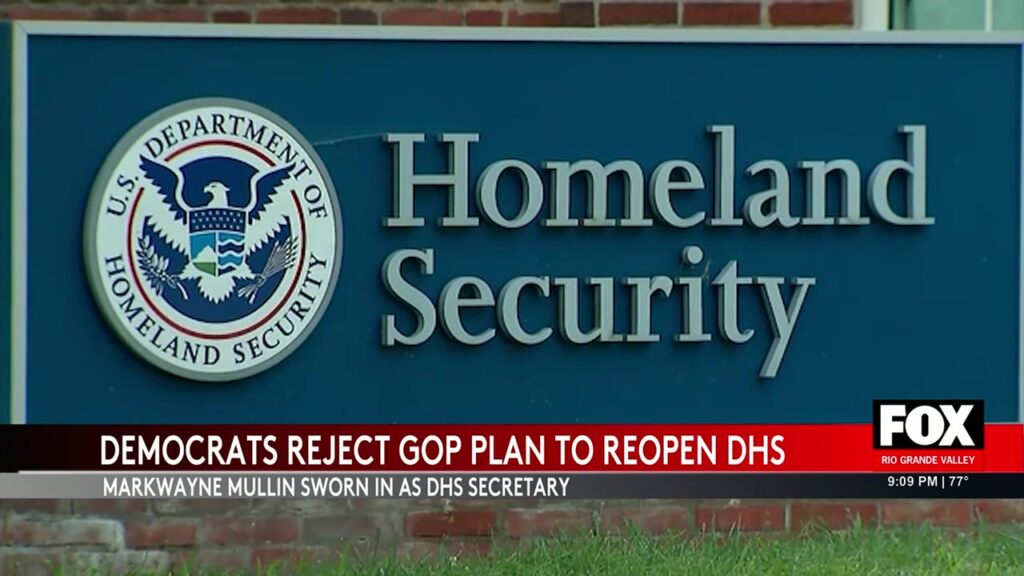
In the harrowing political standoff over the ongoing government shutdown, Senate Democrats have rejected a Republican-backed proposal aimed at funding the Department of Homeland Security (DHS). The plan, which had garnered the support of President Trump, proposed extending DHS funding yet kept ICE allocations unchanged, much to the Democrats' disapproval. This decision comes amid an escalating crisis as government services and employees face the impacts of the prolonged shutdown, threatening not only the day-to-day operations but also national safety and security.
The stalemate over funding highlights persistent ideological divides between the two major political parties on issues related to immigration enforcement and national security priorities. As the shutdown continues, affected government employees and citizens are caught in the crossfire of a debate that is as much about funding as it is about the values and direction of U.S. governance.
Political Impasse
The GOP funding strategy envisioned keeping TSA and other essential DHS services operational while maintaining ICE's existing budget. However, Democrats raised concerns about the distribution of funding, arguing that it failed to address the underlying issues at the heart of the shutdown, particularly the controversial immigration policies associated with ICE. This Republican proposal was seen as inadequate by the Democrats, who were unwilling to support a plan that did not address broader immigration reform.
The rejection of the funding proposal underscores the broader political impasse that has characterized recent Congressional sessions, where bipartisan consensus seems increasingly elusive. Each party maintains its stance, with Republicans emphasizing security and enforcement, while Democrats call for a more comprehensive approach that considers humanitarian aspects and immigration reform.
Impact on TSA Staffing
This legislative deadlock occurs as over 450 TSA agents have already resigned due to delayed salaries, resulting in severe understaffing and operational disruptions across the nation's airports. In a situation where TSA's efficiency is crucial for airport safety and security, the resignation of agents has led to reported delays and frustrations among travelers. The ripple effect of this staffing shortage is evident in the airport experiences of passengers, who face longer lines and increased wait times due to insufficient staffing to cover security checkpoints.
The Transportation Security Administration (TSA) plays a critical role in maintaining national security by ensuring that passengers and their luggage are properly screened before boarding flights. The shortage and turnover of TSA agents due to the shutdown highlight the vulnerabilities in the security apparatus and underscore the urgent need for a resolution to the funding woes. With reports of affected employees standing at 61,000 nationwide, the pressure mounts on Congress and the administration to resolve funding issues swiftly to restore normalcy and security at airports.
New DHS Leadership
Amidst these legislative tensions, former Senator Mark Wayne Mullin has been appointed as the new head of DHS, succeeding Kristi Noem. Mark Wayne Mullin's leadership at DHS comes at a pivotal time, where resolving the funding crisis is just one among many challenges. His appointment includes the task of leading a department embroiled in controversy and operational hurdles due to the ongoing shutdown. With a background in legislative affairs, Mullin is expected to leverage his experience to navigate the complex web of political negotiations and institutional restructuring needed to manage DHS's expansive mandate effectively.
The transition in leadership at DHS creates both challenges and opportunities. Mullin's role will involve working closely with congressional leaders and the administration to find a path forward that addresses the immediate financial needs of DHS while considering the broader security and immigration policy goals of the administration. His strategic approach and ability to engage with both sides of the political spectrum will be crucial in shaping DHS operations and strategies moving forward.
Additional Resources
For continuous updates regarding government operations and budget negotiations, visit the official U.S. Senate website at senate.gov.