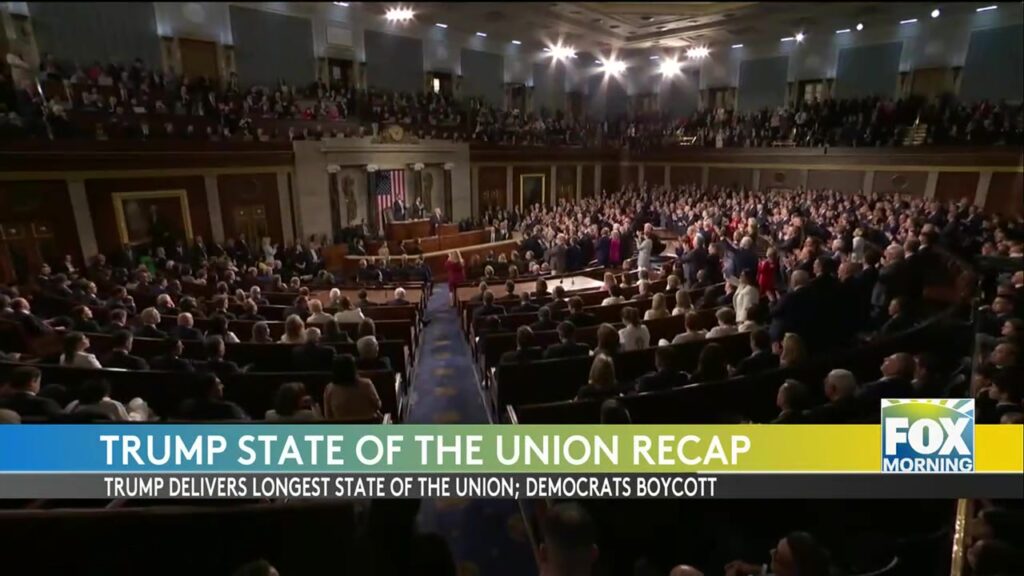
President Donald Trump made history with the duration of his most recent State of the Union address, presented to a sharply divided audience in Washington, D.C. The speech, the longest in U.S. history, underscored the deepening rift between Democrats and Republicans, as many Democratic lawmakers chose to protest or avoid the event entirely. This address came at a pivotal moment in the administration, as it sought to solidify its achievements and gather momentum ahead of upcoming electoral battles.
Broadcast around the 10am hour, the speech was a spectacle that had been anticipated for its potential concessions and controversies. As political watchers and citizens alike settled in for an extensive overview of President Trump's policies and priorities, the address became a microcosm of the broader national divisions that have characterized recent years.
With high stakes on the horizon, the nation was keenly alert to how President Trump's statements might shape the political landscape and affect legislative priorities. The event showcased the intricate dynamics of power and persuasion that are at play in American politics today.
The Longest State of the Union in History
President Trump's address was not only notable for its content but also for its record-breaking length. Lasting nearly an hour and forty-eight minutes, it eclipsed the previous record set by President Bill Clinton over two decades ago. Throughout this lengthy speech, Trump delivered a confident appraisal of his administration's successes, stating emphatically that the nation is "bigger, better, richer, and stronger" than ever before. This optimistic portrayal stood in sharp contrast to the skepticism of his political opponents, revealing the polarized political climate that Washington currently operates within.
The address was meticulously structured to present an image of prosperity and achievement, touching on key issues that have defined Trump's presidency, including economic performance and immigration policies. However, the response from the opposing party and segments of the public indicated a clear dissonance in perception, highlighting ongoing tensions within the Congress and nationwide.
Highlights and Controversies
The centerpiece of President Trump's speech was his administration's economic achievements, particularly the noteworthy reduction in core inflation rates. This claim was part of a broader narrative positioning Trump's economic decisions as drivers of national improvement. Moreover, he welcomed the U.S. men's gold medal Olympic hockey team, evoking a rare moment of bipartisan unity, albeit fleeting.
Immigration remained a particularly divisive issue. Trump emphasized the importance of protecting American citizens over "illegal aliens," a sentiment that resonated strongly with his base but prompted backlash from detractors. This theme of protection and prioritizing American interests was a recurring motif throughout the speech.
Additionally, President Trump addressed looming geopolitical conflicts, particularly with Iran, while advocating for voter ID laws alongside a robust defense of his economic track record. These talking points served not only to rally his supporters but also to set the stage for intense political debates leading up to the midterm elections.
Democratic Counter-Programming and Responses
In stark contrast, Democratic lawmakers opted for various forms of counter-programming to articulate their dissent and vision. Virginia Governor Abigail Spanberger delivered an official response that critiqued Trump's economic strategies, particularly planned tariffs, arguing these would burden American families. Her rebuttal highlighted alternative economic perspectives and proposed strategies to drive cohesive growth and social equity.
These responses underscored the significant ideological disparities between the Republican and Democratic parties, each striving to sway public opinion ahead of critical electoral contests. The discourse surrounding the State of the Union address further illuminated the deep-seated differences in proposed pathways for the nation's future.
As the American public and political analysts continue to assess the implications of President Trump's lengthy and contentious address, its impact on policy-making and electoral politics remains a focal point of interest. How the administration’s narrative will fare against the reality perceived by opposition parties and independents will be pivotal in shaping future legislation and governance.
Additional Resources
For further exploration of State of the Union addresses through history, you may visit the official government archive: history.house.gov