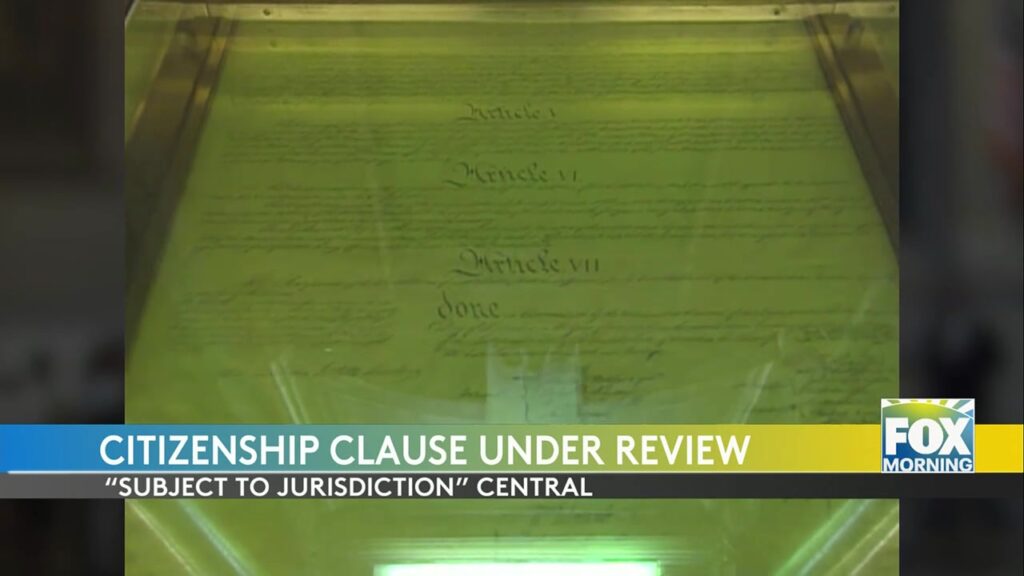
President Donald Trump's attendance at Supreme Court proceedings marks an extraordinary juncture in American jurisprudence and political history. His presence at the court underscores a renewed battle over one of the most fundamental constitutional provisions—the 14th Amendment. This provision, which grants citizenship to anyone born on U.S. soil, is under scrutiny as Trump's administration seeks to exclude children of undocumented immigrants from its purview.
President Trump's initiative to end birthright citizenship was among his administration's key priorities upon returning to office. The challenge that this presents delves deep into the fabric of American constitutional law, igniting rigorous debate amongst legal scholars, politicians, and the public alike about the original intent and modern interpretation of the citizenship clause.
An Unprecedented Legal Encounter
The Supreme Court has never before hosted a sitting president attending oral arguments, making this a landmark event. This move by President Trump is a testament to the weight he places on this issue, which he maintains is crucial for maintaining the integrity of U.S. citizenship laws. The citizenship clause of the 14th Amendment, which states that "all persons born or naturalized in the United States, and subject to the jurisdiction thereof, are citizens of the United States," has begun to engender newfound debates about its applicability to the children of illegal immigrants.
For Trump and his supporters, the rationale is straightforward—the clause was allegedly intended solely for the descendants of freed slaves and not for the offspring of undocumented immigrants who might exploit this provision.
Legal Arguments and Implications
Central to the court's consideration is the interpretation of the phrase "subject to the jurisdiction thereof." Legal historians argue that the framers of the 14th Amendment intended it broadly, covering anyone born on U.S. soil unless they are the children of foreign diplomats. However, opponents of birthright citizenship for the children of undocumented immigrants claim a different understanding should apply, reflecting more contemporary societal and immigration challenges.
The outcome of this legal challenge holds significant potential to reshape immigration policies across the United States. Such a decision could redefine who is automatically considered an American citizen, potentially impacting many lives and altering immigrant family strategies significantly.
Public Opinion and Future Prospects
The court hearing has piqued public interest, as evidenced by the diverse crowd that began gathering outside the Supreme Court a day prior. Public opinion on the matter is divided, with recent surveys showing a growing number of Americans support granting citizenship to children born to undocumented immigrants. This shift reflects evolving cultural and social values where inclusivity is increasingly prioritized.
If the Supreme Court rules in favor of the Trump administration, this could empower the executive branch to further concentrate control over immigration policy, potentially leading to broader legislative reforms. Whatever the outcome, a decision is anticipated by June, setting the stage for a substantial re-evaluation of the nation's immigration framework.
Additional Resources
U.S. Supreme Court