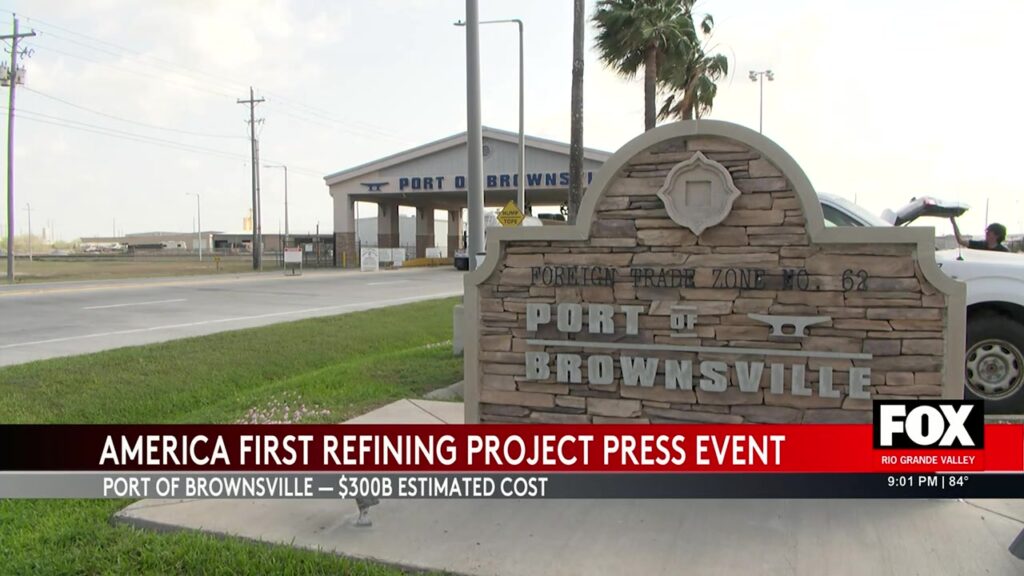
Good evening and welcome to Fox News from the Rio Grande Valley. I'm Samantha Ruiz, and we begin tonight's newscast in Cameron County, where leaders from the Port of Brownsville held a press conference this morning. They provided details on the ambitious $300 billion refinery project, a joint venture with Reliance Industries, a prominent multinational energy company headquartered in India. Announced yesterday in a post from former President Donald Trump, this refinery signifies a historic development as the first of its kind in the United States in the past five decades. The refinery will occupy a significant 240-acre section of the port area.
Talk around town is that this is not your average refinery. With promises of using the best available technology to minimize pollution, it is branded as a 'super clean' facility, potentially the cleanest oil refinery ever built. While the project's initiators are optimistic about the prospect of technological innovations, local environmental groups and concerned citizens are voicing their apprehensions about potential environmental repercussions.
Brownsville's Historic Investment
The Port of Brownsville's new oil refinery has captured the attention of stakeholders, analysts, and policymakers, thanks to its groundbreaking scale and scope. The last time the U.S. saw a refinery of this nature and size was more than 50 years ago. Such industrial ventures underline the United States’ position in the global energy market, emphasizing innovation and energy independence.
An important player in the project, Reliance Industries is well-known for its global reach and technological investments. By selecting the Port of Brownsville, one of the most strategic ports on the Gulf of Mexico, both the company and local authorities envisage long-term benefits for the community and the entire state of Texas.
Economic and Employment Opportunities
Port officials have strongly emphasized the economic growth and employment possibilities stemming from the construction of this advanced refinery. The development phase, expected to last from three to five years, will generate a substantial number of jobs, drawing skilled laborers and specialists from both local and distant communities. Once operational, the refinery is poised to become a pillar of the local economy, providing stable employment and boosting associated industries like transportation and retail.
The economic ripple effect throughout the Rio Grande Valley promises to be formidable. The additional employment opportunities are expected to reduce local unemployment rates and encourage industrial and infrastructure investment in the area. This aligns with long-standing economic development goals for Cameron County and the wider South Texas region.
Environmental Concerns and Protests
Despite the project's economic allure, it does not come without challenges and opposition, primarily from environmental advocacy groups and concerned locals. Critics caution that the new refinery, regardless of its technological advancements, may pose risks to local ecosystems and contribute to resource depletion, such as water scarcity in the region.
Environmental groups have been vocal in urging project leaders to balance corporate interests with community welfare by drafting a robust and transparent impact assessment. They argue that without stringent regulatory frameworks and accountability measures, the refinery could compromise air and water quality and strain existing infrastructure.
Community meetings and grassroots advocacy are ramping up as stakeholders call for inclusive dialogue to address these pressing concerns. Activists stress the need for sustainable development practices that do not sacrifice environmental health for economic gain.
Additional Resources
For comprehensive information about the refinery project, potential environmental impacts, economic benefits, and community engagement activities, residents and interested parties can visit the official Port of Brownsville's website at portofbrownsville.com. Additionally, for environmental guidelines and oversight procedures, the Environmental Protection Agency's site may be resourceful at epa.gov.