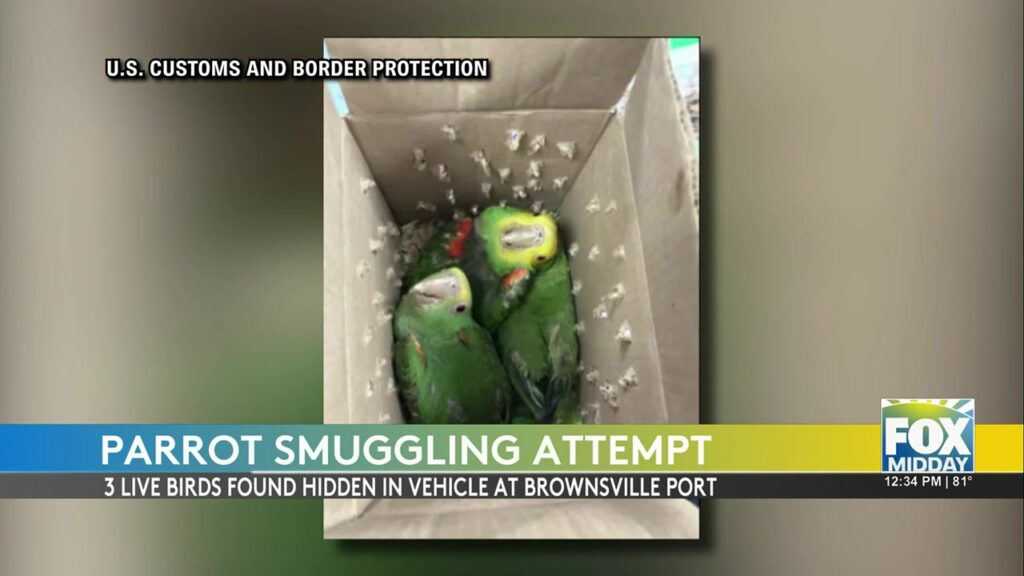
Smuggling attempts at international borders often involve contraband items like drugs, weapons, or even rare goods. However, an unusual case at the U.S. border recently captured attention. On March 13th, during a routine vehicle inspection at the Brownsville Port of Entry, U.S. Customs and Border Protection (CBP) officers discovered three live parrots hidden inside a 2007 GMC Yukon. This case underscores the ongoing challenges of combating illegal wildlife trade while highlighting significant efforts by law enforcement to protect both national security and biodiversity.
The individuals involved in this smuggling attempt were quickly apprehended, and the parrots were secured to prevent the spread of diseases that could pose a threat to U.S. agriculture and native wildlife. The incident serves as a reminder of the intersection between wildlife trafficking and other forms of organized crime, necessitating vigilant monitoring and robust enforcement at the borders.
The Fight Against Illegal Wildlife Trade
Parrots rank among the world's most trafficked birds due to their vibrant plumage and ability to imitate human speech, making them highly sought after as exotic pets. Protected under international conventions like the Convention on International Trade in Endangered Species (CITES), parrots are frequently targeted by traffickers who exploit this high demand for financial gain. In this incident, the parrots were concealed inside a box within the vehicle, illustrating the sophisticated methods smugglers employ to avoid detection by authorities.
Wildlife trafficking is a lucrative underground market, often operating alongside other illegal activities. It is estimated to be worth billions of dollars annually, causing a significant impact on biodiversity and putting additional stress on endangered species. Moreover, smuggling contributes to the spread of zoonotic diseases, which can jump from animals to humans, adding further urgency to efforts in combating this crime.
Legal and Conservation Actions
Once the parrots were discovered, they were promptly turned over to federal partners and placed in the care of a local zoo, where they could receive appropriate care and rehabilitation. Meanwhile, ICE's Homeland Security Investigations initiated a criminal case against the individuals involved. The seriousness of animal smuggling charges is well-documented; violations can result in hefty fines and lengthy prison sentences. This legal framework aims to deter would-be traffickers and emphasize the critical importance of wildlife conservation.
Collaborative efforts between agencies, such as CBP and Homeland Security, highlight the comprehensive approach taken to dismantle smuggling networks. These joint initiatives not only focus on law enforcement but also advocate for conservation, emphasizing that protecting wildlife is intrinsically tied to maintaining healthy ecosystems and, by extension, human health and security.
The Role of Public Awareness and Education
Raising public awareness plays a critical role in preventing wildlife trafficking. Informative campaigns and educational outreach can deter potential buyers from participating in illegal markets, thereby reducing demand for trafficked species. Furthermore, fostering a public understanding of the risks associated with smuggling, such as disease transmission and ecological disruption, can build supportive communities advocating for stringent wildlife protection laws.
Community engagement and education initiatives can also support law enforcement by encouraging citizens to report suspicious activities. Such grassroots involvement is vital for building comprehensive strategies to fight wildlife crime effectively.
Additional Resources
For more information on wildlife protection regulations and conservation efforts, visit the U.S. Fish & Wildlife Service: fws.gov