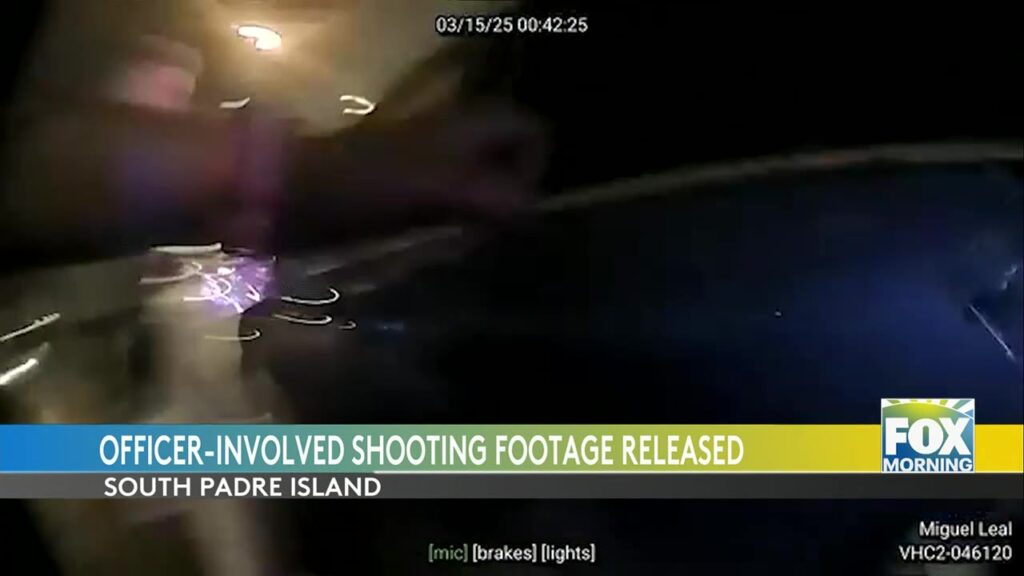
In the ongoing investigation of Ruben Ray Martinez's fatal shooting, newly released body camera footage has surfaced, providing critical evidence that challenges the original police narrative. Found in South Padre Island, the video captures an HSI agent opening fire on Martinez's vehicle during a traffic stop, raising questions about the necessity and justification of the officer's actions. This incident has compelled legal experts and public observers to scrutinize the standards governing use-of-force scenarios and reflect on broader issues concerning police accountability.
South Padre Island, a popular tourist destination in Texas, is not commonly associated with violent incidents, making this case particularly unsettling for its residents and vacationers alike. Martinez was allegedly involved in an undisclosed traffic violation which led to the fateful police encounter.
The Context of the Shooting
The tragic incident took place last year in South Padre Island when law enforcement agents were conducting a traffic stop near an accident scene. The officers involved were reportedly conducting a standard procedure, which turned into a contentious use-of-force situation caught on body camera. The footage is now central to arguments from Martinez's family as they challenge the law enforcement officer's course of action during the confrontation.
South Padre Island police were on-site assisting Homeland Security Investigations (HSI) agents when the shooting occurred. Allegations about Martinez's actions leading up to the shooting have been notably absent from public releases, focusing attention on the gap between claimed threats and what the video appears to show.
Legal Team's Argument
Represented by attorney Butch Haze, Martinez's family argues that the video lacks evidence of any immediate threat to officers that would justify the use of lethal force. According to the legal team's review thus far, the video fails to corroborate the narrative that officers were under imminent danger, contradicting the justification offered by law enforcement for the fatal shooting. The legal scrutiny aims to highlight any discrepancies in the officer's report and body cam footage descriptions, seeking accountability and prompting potential systemic changes.
In the court of public opinion, as well as in potential legal settings, these discrepancies may be pivotal. The question of whether officers had other de-escalation tools available is also a focus of critique among legal analysts reviewing the incident.
Next Steps in the Case
As the investigation continues, Martinez's mother, Rachel Reyes, is contemplating legal action based on the newfound video evidence. This step, however, will rely heavily on legal consultations and the family's readiness to pursue justice through the courts—a process that can be lengthy and taxing.
Further developments in this case could potentially influence local law enforcement protocols and future training initiatives regarding traffic stops and interactions with the public. Legal commentators emphasize the importance of transparency and the public's right to hold police officers accountable, particularly in cases involving the use of deadly force.
Additional Resources
For further information regarding legal standards in use-of-force cases and rights in interactions with law enforcement, the following government resource may be useful: U.S. Department of Justice - Civil Rights Division.