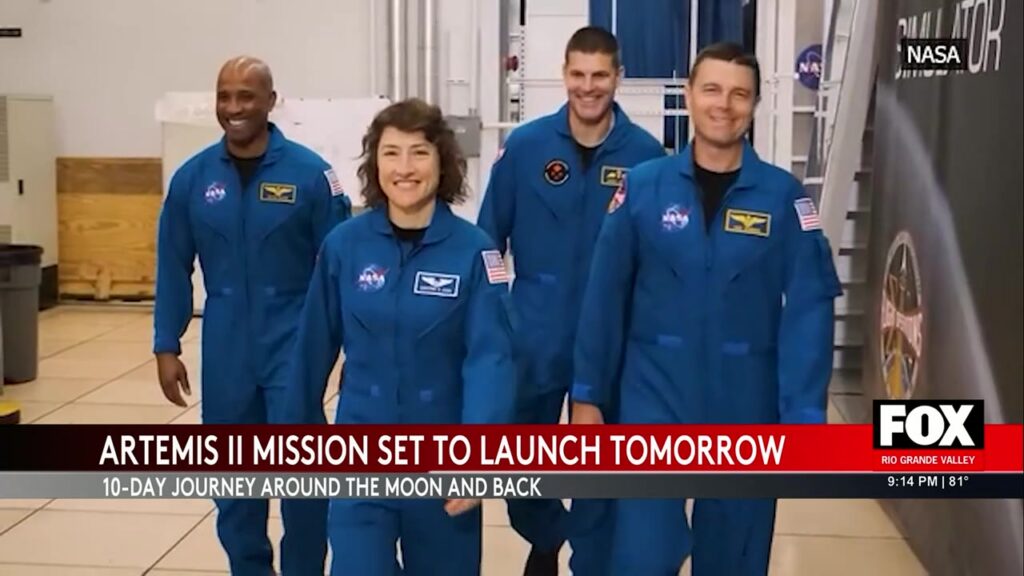
For the first time in over five decades, NASA plans to send human astronauts on a journey to orbit the moon as part of their Artemis 2 Mission. This ambitious venture is set to catalyze a new era in space exploration, jointly advancing international and scientific cooperativity. The Artemis program represents NASA's commitment to returning humans to the moon, fostering collaboration with international partners, and laying the groundwork for future manned missions to Mars and beyond.
This Mission is particularly significant because it marks the first time humans will travel beyond Earth's orbit since the Apollo program, which concluded with Apollo 17 in 1972. The Artemis 2 Mission serves as a precursor to Artemis 3, which aims to achieve a manned lunar landing. During their 10-day journey, the crew will orbit the moon, testing critical systems and gathering valuable information that will pave the way for future landing missions.
Mission Objectives and Crew Details
Scheduled for launch as early as Wednesday from Kennedy Space Center in Florida, Artemis 2 will see four astronauts, including one Canadian and three Americans, embark on a 10-day journey around Earth’s celestial satellite. The primary objective of this Mission is to ensure the Orion spacecraft’s systems and operational capabilities are ready for subsequent missions, including Artemis 3, where astronauts aim to land on the lunar surface.
The crew will not land on the moon during this Mission; instead, they will conduct a lunar flyby, traveling thousands of miles above the lunar surface. This journey will allow NASA to assess the functionality of all onboard systems under real Mission conditions, ensuring the safety and success of future lunar landings.
Embarking on Historic Ventures
The pursuit of lunar exploration re-engages humankind’s curiosity and capability in space exploration. Artemis 2 will test the Orion spacecraft’s durability, guiding technology essential for longer-duration missions in the future. The Mission signifies NASA's commitment to international collaboration, as it includes astronauts representing both American and Canadian space agencies. This collaboration highlights the global interest in exploring beyond our planet and finding sustainable ways to operate in space.
With the Artemis program, NASA envisions establishing a sustainable human presence on the moon by the end of this decade. This Mission can foster a deeper understanding of our natural satellite, offering insights into its resources and potential for supporting human life.
Future Implications
The successful execution of the Artemis 2 Mission could lay the groundwork for more frequent and elaborate lunar explorations, extending the boundaries of human experiential and technological growth. Advancements in space travel technology developed for the Artemis program will have broad applications, potentially revolutionizing industries such as telecommunications, resource mining, and environmental research.
Beyond scientific and technological achievements, Artemis 2 symbolizes human ambition to transcend interstellar limits. Achievements from these missions could inspire future generations to pursue careers in STEM fields, cultivating a new era of space exploration and discovery.
Moreover, the insights gained from these missions could potentially inform sustainable living practices on Earth, as technology developed for operation in extreme environments may translate to solutions for global challenges. The Mission is not just about exploring new worlds but also about improving our world here on Earth.
Additional Resources
Learn more about NASA's Artemis program and its plans for lunar exploration at nasa.gov. For further details about other NASA missions and scientific endeavors, visit their official website.