As Texans approach a pivotal election cycle, the Republican primary for the U.S. Senate seat held by John Cornyn exemplifies the dynamic shifts in Texas politics. Since his election in 2002, Cornyn has been a prominent figure in the U.S. Senate, known for his steady advocacy of conservative policies that align with the traditional values of the Republican Party. However, the political landscape in Texas is evolving, and Cornyn now faces a formidable challenge from within his party.
The Republican primary has generated considerable interest as Cornyn contends with two notable figures: Texas Attorney General Ken Paxton and Congressman Wesley Hunt. This competition underscores a broader ideological transformation within the GOP, as a segment of the party seeks fresh leadership and policy innovation. With the primary election underway, each candidate's platform is being scrutinized by voters eager for change or continuity in their political representation.
John Cornyn: A Veteran in the Race
John Cornyn's longstanding tenure in the Senate makes him a well-known entity in Texas politics. Born in Houston, Cornyn has built a career on advocating for policies that resonate with his conservative base, including fiscal responsibility, national security, and a stringent immigration stance. His continuous re-election since 2002 is a testament to his strong support base, though the current primary challenge signals a potential shift in voter priorities.
A critical aspect of Cornyn's campaign is highlighting his extensive legislative experience and success in navigating complex political environments to serve Texas's interests. However, his association with the Republican establishment—often targeted by critics seeking reform—poses a unique challenge as he confronts candidates promoting alternative visions.
The Challengers: Paxton and Hunt
Ken Paxton, the current Texas Attorney General, commands significant attention, thanks in part to his high-profile legal battles and steadfast conservative stances. He is perhaps best known for his vigorous defense of voter ID laws, a position that has earned him both acclaim from conservatives and criticism from those concerned about voter suppression. Despite facing ongoing legal issues, Paxton's unwavering ideological consistency appeals to a substantial portion of the Republican electorate.
In contrast, Congressman Wesley Hunt, a former U.S. Army helicopter pilot, enters the race with a focus on fresh perspectives and new policy directions. His campaign emphasizes federal-level changes and prioritizes legislative reforms, seeking to appeal to voters interested in reform-minded policies. Hunt's military background and commitment to public service add a layer of depth to his campaign, presenting him as a candidate keen on pragmatic solutions to national issues.
Voter Mobilization and Political Outcomes
The Texas Senate race is more than just a local political event; it reflects broader national trends and has significant implications for future legislative priorities. Voter mobilization efforts have been robust, with different factions within the Republican Party working hard to ensure their preferred candidate advances to the general election. The primary results, therefore, are not just a reflection of current political sentiments in Texas, but they also set the stage for the ideological battles likely to influence the national GOP platform.
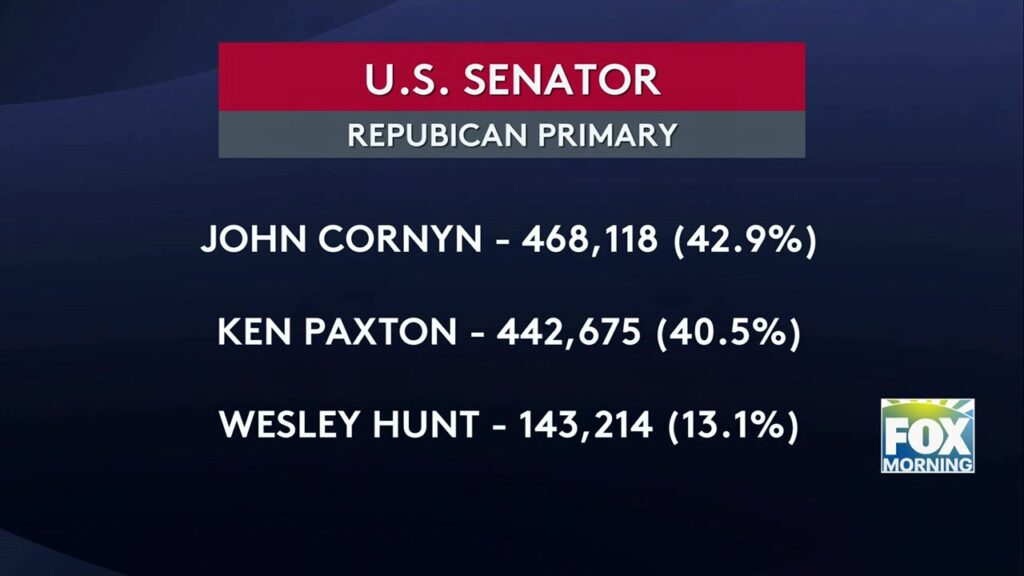
With 468,118 votes already counted, Cornyn leads with 42% of the vote, followed closely by Paxton with 40%, and Hunt trailing at 13%. Since no candidate has reached the required 50% threshold, the race is poised to proceed to a runoff election. This outcome highlights the competitiveness of the primary and signifies a divided, yet engaged, Republican electorate in Texas.
As Texans continue to engage in this vital electoral process, the results will not only determine the Republican candidate for the U.S. Senate seat but will also serve as a bellwether for larger political trends within the state and across the nation. The outcome will shape legislative priorities, highlight contrasts in policy sentiment, and set the stage for the general elections, influencing the broader national political conversation.
Additional Resources
Further insights on Texas political races can be found at the Hidalgo County Elections Office.