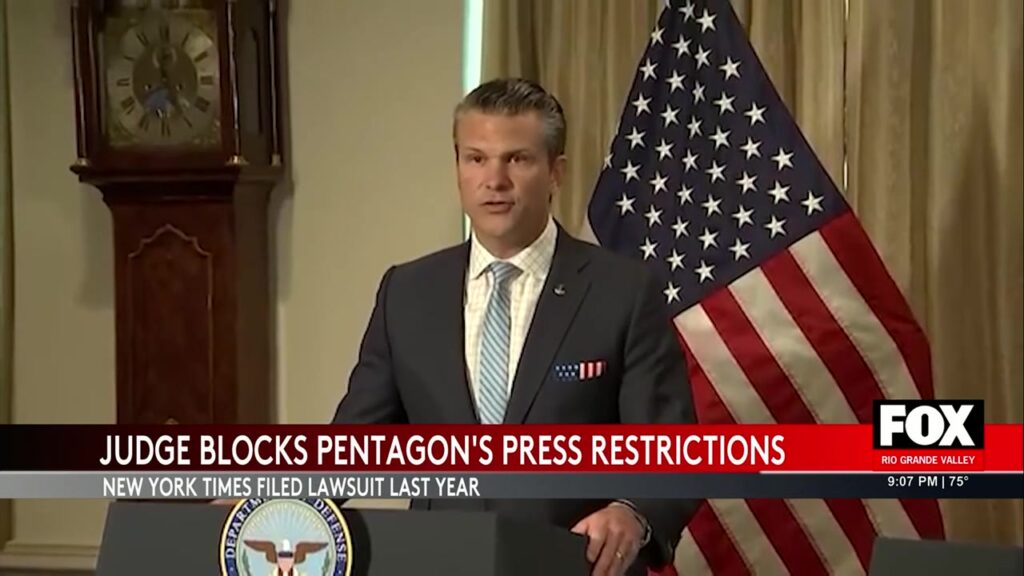
In a recent landmark ruling, a federal judge has overturned a controversial policy imposed by the Pentagon, affirming the critical role of the First Amendment in protecting freedom of the press. This decision comes after prominent news organizations, including The New York Times and CNN, refused to comply with a requirement set by then-Defense Secretary Pete Hexit. The policy demanded that reporters sign a confidentiality pledge to avoid using unauthorized material. By challenging this policy, these media giants emphasized the potential threat such restrictions posed to journalistic freedom and integrity.
The lawsuit, which was spearheaded by The New York Times, argued that the confidentiality agreement violated the First Amendment rights of reporters. The court's ruling in favor of the media organizations highlights the ongoing struggle between maintaining national security interests and upholding constitutional freedoms. This case has set a vital precedent in ensuring journalists can continue their work without undue government constraints.
First Amendment Conflict
The First Amendment to the United States Constitution is a cornerstone of American democracy, protecting freedoms of speech, religion, assembly, and the press. The Pentagon's policy, introduced as a means to regulate media interactions, required reporters to refrain from publishing sensitive information not authorized for release. This condition sparked significant controversy, primarily because it challenged the fundamental rights guaranteed to journalists. As watchdogs of democracy, news organizations argued that the policy encroached on their ability to report freely and hold the government accountable.
In response to the legal challenge, a federal court acknowledged these concerns, ultimately ruling that the Pentagon's directive was not permissible under the First Amendment. The court's decision emphasized that the press must operate without fear of government sanction or censorship, especially when reporting on matters of public interest.
Implications for Media Agencies
With this verdict, media agencies are empowered to pursue investigative journalism even in areas traditionally shrouded in secrecy. This safeguard against potential governmental overreach is crucial for ensuring truth in reporting and maintaining an informed citizenry. The ruling is seen not only as a victory for press freedom but also as a reinforcement of journalists' rights against coercive pressures to curtail information dissemination.
The ability for journalists to gather and publish information without restrictions enables them to bring transparency to governmental operations. Consequently, this supports informed public discourse and upholds the democratic principle of checks and balances within institutions.
Overall Outcomes and Future Considerations
This decisive judgment reinforces key democratic principles, pivotal to ensuring accountability and transparency within governmental institutions. It emerges amid broader discussions about the scope of freedom of the press and is likely to have long-lasting effects on future media policies. As discussions continue regarding the balance between national security and democratic freedoms, this ruling provides a robust affirmation of the press's right to operate independently and without undue constraints.
The decision aligns with broader societal and legal understandings of the role of the press in democratic governance, making it an important reference point in ongoing and future dialogues about media freedoms.
Additional Resources
To further explore First Amendment rights, visit aclu.org/where-we-stand/first-amendment. For detailed legal understanding and historical context, resources available at loc.gov/exhibits/treasures/first-amendment.html provide valuable insights.