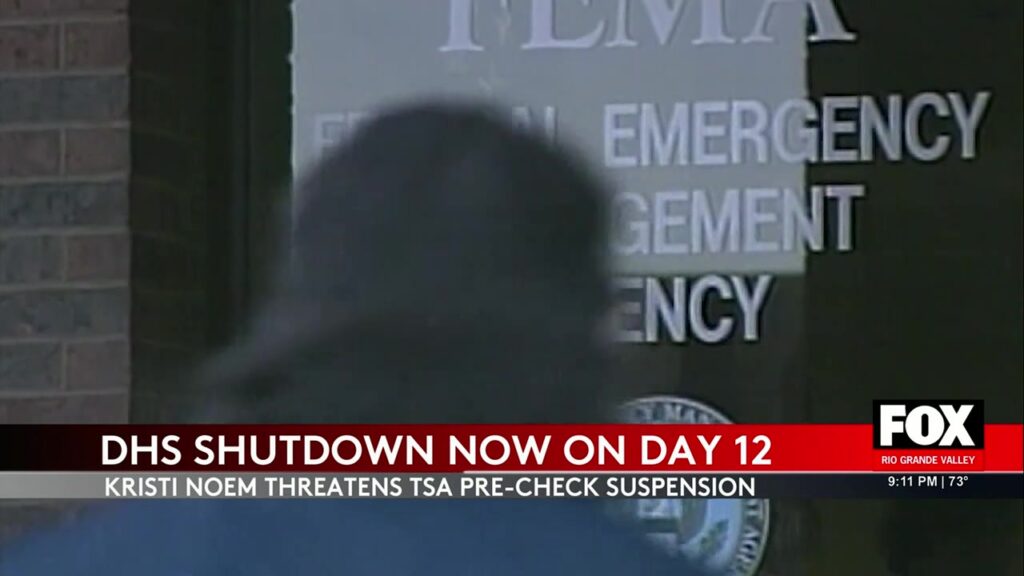
The current funding deadlock affecting the Department of Homeland Security (DHS) has had a substantial impact on the federal government's ability to provide critical services. This impasse has led to a partial government shutdown, which has now lasted for several days, negatively affecting various functions of the federal system, particularly those managed by agencies like the Federal Emergency Management Agency (FEMA). As the situation unfolds, thousands of government workers find themselves either furloughed or working without pay, waiting for resolution in the halls of Congress.
The shutdown’s effects are being felt across a broad spectrum. While non-essential operations are experiencing delays, essential services have been forced to make do with minimal resources. This situation presents significant complications, notably in disaster-prone areas where FEMA plays a crucial role in managing aid and recovery operations. The interruption of funding disrupts ongoing and future recovery efforts, jeopardizing the timely response needed in critical situations.
Impact of the Shutdown
The recent impasse surrounding the Department of Homeland Security's funding has resulted in a partial government shutdown with significant consequences. Essential services like those provided by FEMA are experiencing halts in non-emergency recovery work, potentially delaying disaster aid across affected states. The current budget stalemate intersects political, social, and public safety spheres with dire implications. In addition to FEMA’s impacted operations, the Transportation Security Administration (TSA) staff are also affected, working under stressful conditions while adapting processes amidst threats of prolonged shutdown.
Political Standstill
Amid the funding controversies, Republicans and Democrats remain locked in a fierce debate over immigration policies, with each side unwilling to concede foundational negotiation points. The crux of the matter revolves around differing ideologies on border control and immigration reform. President Trump, in his recent critique, faulted the Democrats for the ongoing funding block. He has emphasized the necessity for stricter border controls, a stance that is met with staunch opposition from Democrats who are demanding comprehensive immigration reform. Meanwhile, Senator Chuck Schumer remarked on missed negotiation opportunities, metaphorically hearing ‘crickets’ from the opposite aisle.
Searching for Solutions
As the gridlock continues, DHS, with its critical branches like the TSA, remains under accommodative compromise from unpaid yet working employees. Compounding the issue, air travel safety and efficiency hang in a delicate balance as TSA officers strive to maintain standard operations. Homeland Security’s Secretary, Christy Nome, is reassessing TSA operations adaptations and how they can continue to function effectively under these strained circumstances. These ongoing efforts underline the priority of securing both federal employee welfare and public safety. The hope is for heightened negotiations that will eventually restore normalcy amid disrupted public service workflows.
Various initiatives are being proposed to mediate the current crisis. Some lawmakers are advocating for temporary funding solutions to end the stalemate, while others propose targeted approaches that focus on specific areas of conflict in the hope of incremental progress. Experts caution that prolonged shutdowns can lead to lasting negative impacts on both government operations and public confidence, necessitating a collaborative effort to resolve the deadlock swiftly.
Additional Resources
Learn more about government shutdowns and their effects on federal operations at USA.gov: https://www.usa.gov/shutdowns