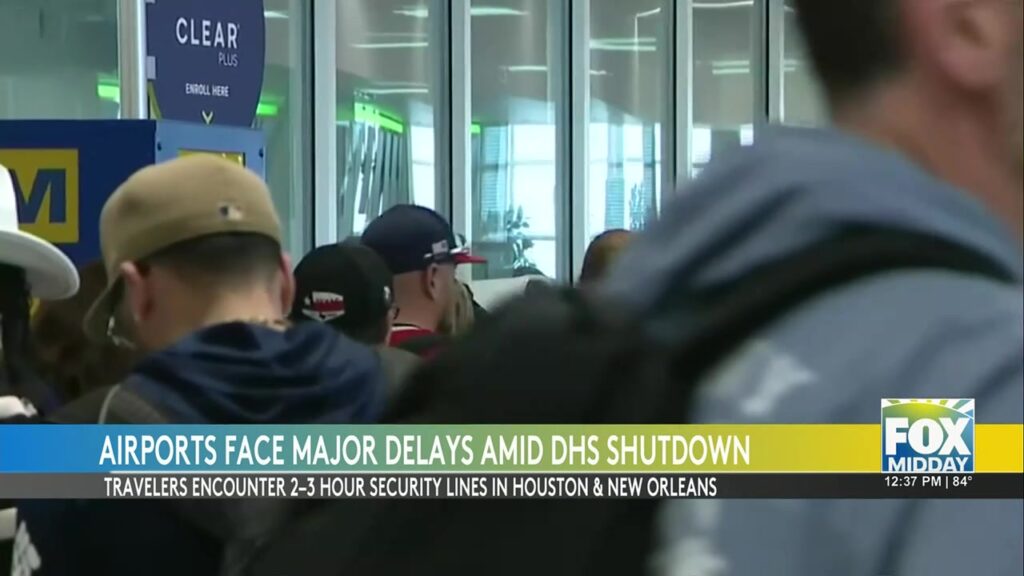
The United States is confronting a consequential wave of travel disruptions as the Department of Homeland Security (DHS) shutdown continues to impact major airports nationwide. Long waits at Transportation Security Administration (TSA) security checkpoints have extended up to three hours in some locations, challenging both passengers and airport operations significantly. These unprecedented delays have arisen as TSA employees, who are essential to maintaining secure and efficient airport operations, face the impact of the shutdown without immediate compensation, leading to understaffed checkpoints.
The ripple effects of the shutdown extend beyond just the airports. The shutdown underscores the critical role DHS plays in national security and public safety. It also highlights the broader socio-political issues at play, focusing on immigration reform and national infrastructure. As the debate continues in national politics, the strain on travelers and airport staff remains palpable, with significant logistical challenges and heightened public concern.
Significant Passenger Delays
Airports in key cities such as Houston and New Orleans have reported critical staffing shortages that have exacerbated the scramble at security lines, ultimately leading some travelers to miss their flights. The pressure is mounting on available TSA workers, some of whom endure the dual stress of extended shifts and financial uncertainty due to their furloughed status. This shortage has not been limited to a few airports; instead, it resonates across several transit hubs nationwide.
As spring break approaches, passenger numbers are expected to soar, with the TSA projecting an unprecedented 171 million passengers to take to the skies. This potentially creates a perfect storm of congestion and frustration at airports already struggling with the effects of the shutdown.
Political Repercussions
The ongoing shutdown presents broader implications, with key political figures clashing over DHS funding. The crux of this disagreement lies in immigration policies and border security measures, which are central to the funding debates. Both parties remain entrenched in a contentious battle of wills, each blaming the other for the current impasse.
The shutdown represents a significant challenge for policymakers seeking to balance national security with practical governance. Consequently, these political disputes are not merely confined to legislative chambers but reverberate throughout the nation, directly impacting ordinary citizens, particularly travelers who find themselves stranded or delayed.
Traveler Frustration and Expectations
Amidst this chaos, travelers are advised to arrive at airports even earlier than usual, with recommendations reaching up to five hours in advance for international flights. While patience is being encouraged widely, the anxiety generated by these delays continues to escalate. Airport staff are also striving to manage passenger expectations, offering as much information and assistance as feasible under the circumstances.
Support from the aviation community and allied services, such as airlines and ground handling teams, has been crucial in mitigating some of the adverse effects of this disruption. However, the situation remains tense, with the hope that resolutions to the shutdown will come swiftly, allowing the restoration of normal DHS operations.
For travelers, it is crucial to stay informed about flight statuses and airport conditions through official channels. Cooperation with airport staff and adherence to suggested arrival times can assist in easing individual experiences amidst the broader difficulties posed by the shutdown.
Additional Resources
For comprehensive updates on government shutdowns and contingency planning, visit the Department of Homeland Security. Additionally, for more localized travel information, impacted travelers are encouraged to check with their respective airports or airline carriers for specific advisories and recommended actions.