Table of Contents
Trump Orders Precision Strikes on Iran’s Nuclear Sites, Declares Mission a “Spectacular Success”
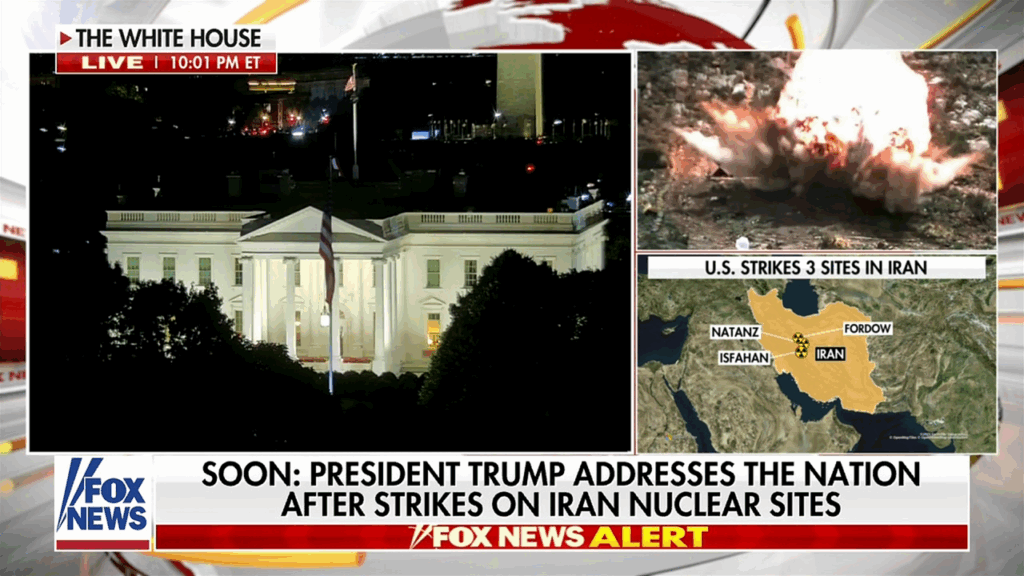
In a dramatic late-night address from the White House, President Donald Trump confirmed that the United States has launched its first direct airstrikes against Iranian nuclear facilities, marking a significant escalation in the ongoing Middle East conflict. The strike comes just days after a wave of Israeli attacks on Iran’s nuclear infrastructure and amid rising tensions across the region.
A “Full Payload” Attack
Speaking from Cross Hall, flanked by top national security officials including Vice President J.D. Vance, Secretary of State Marco Rubio, and Secretary of Defense Pete Hegseth, President Trump called the mission “a spectacular military success.”
“Tonight I can report to the world that the strikes were a spectacular military success. Iran’s key nuclear enrichment facilities have been completely and totally obliterated,” Trump declared.
According to the president and military officials, the U.S. deployed six bunker-buster bombs and 30 Tomahawk missiles from B2 bombers and submarines in a coordinated attack on three major nuclear sites: Fordo, Natanz, and Isfahan. Trump stated that all American aircraft returned safely.
A Message to Tehran: “Make Peace or Face Tragedy”
The surprise offensive followed Trump’s earlier indication that he would decide within two weeks whether to join Israel in military action—a statement he now admits was a cover for operational security.
“Iran must now agree to end this war,” Trump wrote on Truth Social hours before his speech, closing the post with a plea: “Now is the time for peace.”
But he didn't mince words about what lies ahead if Iran does not comply.
“There will be either peace, or there will be tragedy for Iran far greater than we have witnessed over the last eight days,” Trump warned. “There are many targets left… most of them can be taken out in a matter of minutes.”
Citing 40 Years of Hostility
Trump recounted decades of Iranian hostility, citing the deaths of Americans from roadside bombs and the legacy of General Qassem Soleimani. He framed the strikes as both a punitive measure and a protective act, defending U.S. troops, allies, and regional stability.
“For 40 years, Iran has been saying 'Death to America, death to Israel.’ They have been killing our people, blowing off their arms, blowing off their legs with roadside bombs—that was their specialty,” Trump said.
He also praised the Israeli military and Prime Minister Benjamin Netanyahu for their collaboration.
“We worked as a team like perhaps no team has ever worked before,” he said, adding that the operation may have permanently set back Iran’s nuclear ambitions.
What’s Next?
The administration plans to follow up with a press conference at 8 a.m. led by Secretary Hegseth and Joint Chiefs Chairman General Dan Raisen-Kaine. The President made it clear: if Iran retaliates against American citizens or military bases, the U.S. response will be “far greater.”
This marks a turning point not just in the Iran-Israel conflict, but in U.S. foreign policy, as Washington transitions from a posture of restraint to direct confrontation.
While Trump ended his speech with a call for peace, the message was unmistakably clear: America is now an active participant in a broader regional war.
Helpful Links and Resources:
- White House Official Site
- U.S. Department of Defense
- U.S. State Department
- Israel Ministry of Defense
What This Means for Americans
As this conflict escalates, many Americans may feel a mix of emotions — from pride in the military's precision and effectiveness to anxiety about what may come next. Here are a few things to consider in the days ahead:
- Stay Informed: Follow verified news sources for updates. The situation is fluid, and misinformation spreads quickly during global crises.
- Support Military Families: With U.S. forces involved in direct action, consider reaching out to veterans’ groups or local military families. Acts of solidarity and appreciation can go a long way.
- Watch for Cyber Threats or Retaliation: Homeland security officials may increase alerts for potential retaliatory cyberattacks or propaganda campaigns. Stay vigilant online and report suspicious activity.
- Seek Community & Perspective: If you're feeling anxious, you're not alone. Talk with family, community members, or counselors. Fear is a normal reaction — but so is resilience.