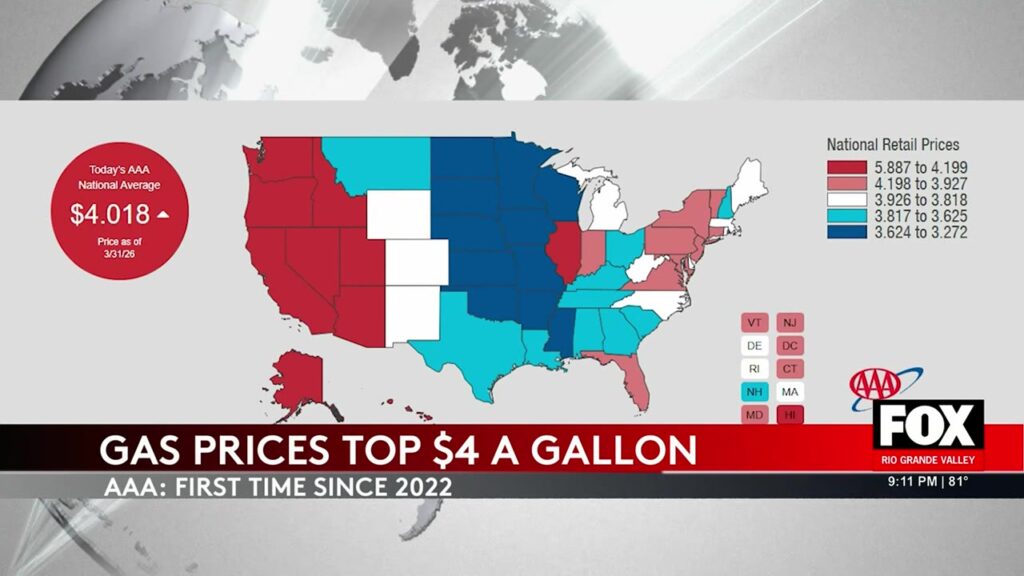
In recent weeks, a significant rise in gas prices has left many Americans grappling with higher transportation costs. This price surge, reaching over $4 per gallon for the first time since 2022, is largely attributed to escalating tensions in the Middle East, particularly involving Iran. The geopolitical unrest in this region has disrupted global oil supplies, leading to market instability.
The conflict in Iran, despite occurring thousands of miles away, has rippled across the U.S. economy, affecting everyday life from the fuel pump to the grocery store. As the cost of gasoline rises, the financial burden on American families and businesses grows, sparking discussions about the future of energy security and the economy.
Price Hikes at the Pump: The Iran Conflict's Ripple Effects
As tensions rise between Iran and the United States, American consumers are reeling from the impact at the gas pump. For the first time since 2022, gas prices have climbed above $4 per gallon nationally, hitting states like California particularly hard, where prices have surpassed $5.
The ongoing conflict and strategic maneuvers by Iran to blockade oil shipments have significantly contributed to this economic strain. Their actions signal continued defiance against international pressures, keeping oil markets unstable. The war’s effects stretch beyond mere fuel costs, impacting the logistics and transportation sectors with the price of diesel also reaching unprecedented heights.
Economic Ramifications for Consumers and Beyond
The spike in fuel prices has significant implications for the broader economy, translating into higher costs across various industries. Logistics and delivery services face steeper operational expenses, feeding into consumer prices for goods and setting off a ripple effect throughout retail and food supply chains.
This economic strain inevitably trickles down to the average consumer. With higher transportation costs factored into daily operations, products at grocery stores and other retailers are showing corresponding price increases—making budget management a more pressing concern for families nationwide.
Small businesses, in particular, are feeling the pinch as profit margins shrink and operational costs rise. Restaurants, manufacturers, and farmers who rely heavily on transportation are forced to adjust their prices, inevitably passing these costs onto consumers. In turn, those with fixed or lower incomes are the hardest hit, finding it increasingly difficult to manage monthly expenditures.
Government Response and Future Projections
Although past strategies abstained from targeting Iran’s oil infrastructure directly, U.S. officials, including President Trump, have warned of potential escalations should Iran continue its blockade policies. This stern stance reflects the seriousness of the situation—both as a geopolitical issue and a challenge to global oil supply chains.
At the same time, lawmakers are under pressure to respond to domestic economic concerns. Proposals for increasing alternative energy investments and incentivizing public transport infrastructure are among the measures being discussed. The goal is to reduce dependency on foreign oil and promote a transition to cleaner, more sustainable energy forms.
Amidst these challenges, consumers and businesses alike remain hopeful that future negotiations might drive relief at the pump while decreasing geopolitical instability. The need for a long-term strategic plan is apparent as both officials and economic analysts weigh the broader implications.
Economic experts also suggest that short-term measures, such as releasing oil reserves, could ease some pressure. However, these actions come with their own risks and potential consequences, underlining the complexities of the current energy landscape.
Additional Resources
For further reading on international impacts on fuel prices, visit eia.gov.