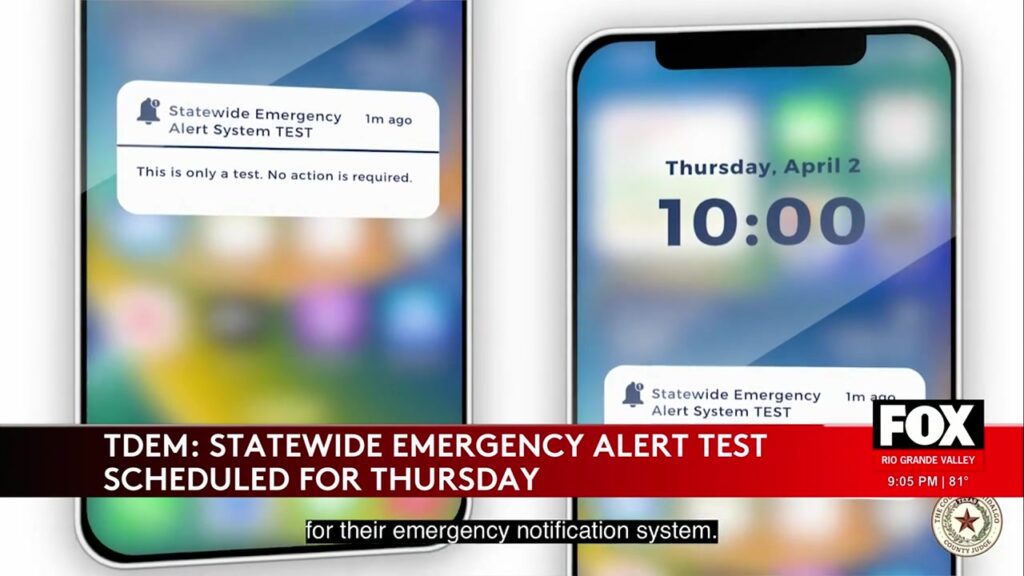
Ensuring the safety and security of residents is a fundamental priority for any community, and Texas is no exception. The Texas Division of Emergency Management has announced a statewide emergency alert drill set to engage Texans across various counties. Notable among these participating counties are Hidalgo and Cameron, home to bustling cities like McAllen, Brownsville, and Harlingen. This initiative forms part of a larger objective to enhance preparedness and fortify emergency response mechanisms throughout the state, affecting nearly 3.5 million residents.
The emergency alert system is a critical component of public safety infrastructure, allowing for rapid communication during emergencies. With the inherent unpredictability of natural and man-made disasters, these systems act as lifelines, disseminating vital information swiftly to the masses. By conducting statewide tests, Texas aims to guarantee these channels are reliable and effective.
Drill Details
The emergency alert drill is scheduled for Thursday, within a timeframe of 10 a.m. to 12:30 p.m. During this window, residents will receive several test alerts on their phones. This comprehensive trial is designed to assess both state and local emergency communication systems, verifying their operational readiness. The Texas Division of Emergency Management aims to identify any potential shortcomings and make necessary adjustments to improve the reliability and speed of these alerts.
Importantly, this drill offers a realistic simulation of potential scenarios, ranging from severe weather events such as tornadoes and hurricanes to public safety threats. By preparing for a spectrum of emergencies, Texas hopes to protect its communities more effectively.
Importance of Preparedness
Preparedness is not a mere administrative task but a moral imperative. Recent years have underscored the criticality of readiness, as states grapple with challenges like hurricanes, flash floods, and heatwaves. Conducting regular drills helps in mastering protocols, ensuring that communication lines remain unbroken, and facilitates a coordinated response during real events.
These tests allow the Texas Division of Emergency Management to evaluate how successfully alerts reach residents across different platforms, whether through mobile devices, radios, or televisions. Assessment of the alert efficacy also involves understanding public reactions and the time taken to acknowledge the messages. Such insights are invaluable for refining the processes.
Community Involvement
Public participation is crucial for the success of this drill. While some residents may perceive these tests as a minor inconvenience, the simulation offers them an opportunity to engage with emergency systems actively. Community feedback is invaluable, as it highlights areas where systems can be improved, ensuring that alerts are received efficiently and clearly understood.
Understanding and participating in emergency protocols fosters a culture of preparedness and awareness. Residents quickly recognizing the nature of alerts and knowing how to respond is vital. As the state continues to prioritize safety, community-based feedback mechanisms will be integral in fine-tuning systems to cater to public needs precisely.
Additional Resources
Preparation doesn’t stop with a single drill. For more information on emergency preparedness and useful tips on creating personal emergency plans, resources are available at ready.gov. By utilizing these tools, individuals can take proactive steps in safeguarding themselves and their families during times of crisis.