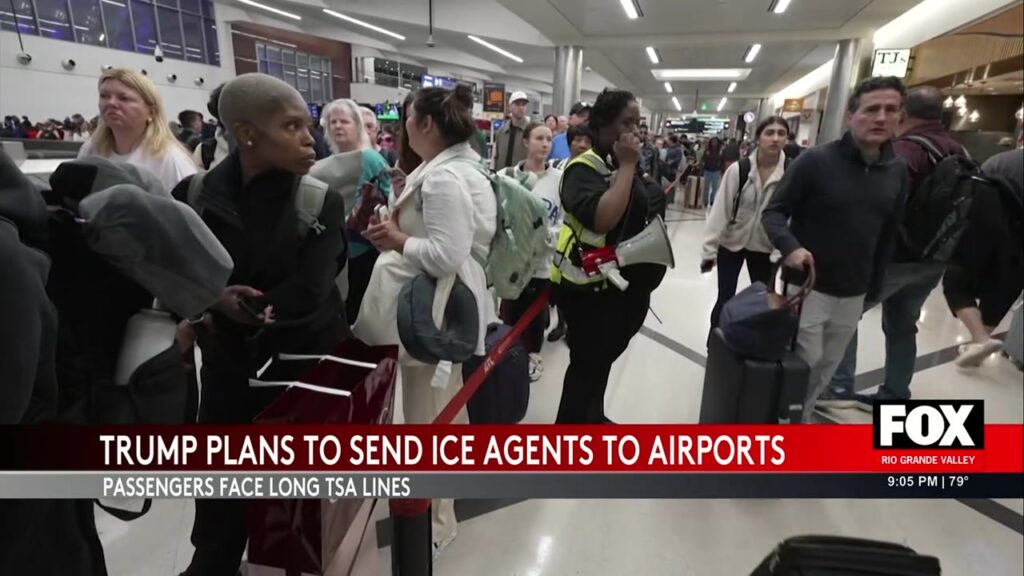
The partial government shutdown has emerged as a significant disruptor to air travel across the United States, with airport security becoming a focal point of growing concern. As the standoff between lawmakers continues, the ripple effects are being felt acutely by travelers and airport personnel alike. With Transportation Security Administration (TSA) agents working without full pay, many are facing an unprecedented strain as delinquency in compensation leads to logistical challenges nationwide.
This impasse threatens to paralyze airport operations, hitting the busiest hubs the hardest. Hartsfield-Jackson Atlanta International Airport, recognized as the busiest airport in the country, has become a dramatic scene where wait times have soared past two hours, showcasing the impact of reduced staffing due to TSA agent shortages.
Impact of the Shutdown on Airports
As the shutdown endures, it exacts a toll on the efficiency of air travel. Airports are grappling with the challenge of maintaining security standards amid a growing deluge of travelers. The TSA's workforce, enduring the effects of halted paychecks, is seeing increased instances of absenteeism, commonly referred to as 'sick outs'. This phenomenon further exacerbates waiting and processing times, endangering operational effectiveness and passenger satisfaction.
Airports, especially major international ones, struggle to fill the gaps left by absent workers. The Trump administration's anticipation to deploy Immigration and Customs Enforcement (ICE) agents as a stopgap measure has been met with mixed reactions. Though intended to alleviate some of the pressure on TSA agents, the decision highlights the desperation to maintain normalcy amid a prolonged governmental and administrative deadlock.
Government Response and Criticism
The suggestion of ICE agents stepping into roles traditionally held by TSA staff has instigated both logistical and political debates. Notably, the unique skills and training TSA agents possess cannot be easily substituted, leaving many to question the practicality and efficacy of such a proposal. Critics have expressed skepticism about ICE's involvement, stressing that the solution could be inadequate and temporary.
In the political corridors, this proposal has fueled a fresh wave of controversy. Many lawmakers, particularly those on the Democratic side, argue for more structural solutions that transcend makeshift fixes. They call for reforms that address not just immediate airport security needs but also broader immigration policy oversights, suggesting that a reliance on ICE staff may only superficially address the underlying issues.
Economic and Social Costs
The impact of the shutdown extends beyond airport lines and delayed flights. It reveals deeper economic and social repercussions, most poignantly felt by TSA agents and their families who endure a loss of income stability. As paychecks halt, household budgets tighten. The dilemma of choosing between essential expenses like commuting and basic needs further underscores the precarious situations faced by these workers.
This uncertainty bleeds into wider economic concerns, with implications such as rising energy prices threatening broader market stability and potentially leading to social unrest. The shutdown exemplifies the cascading effects of political impasses, magnifying vulnerabilities within working communities and highlighting the need for comprehensive, bi-partisan resolutions.
Additional Resources
For official guidance and updates on federal government operations, visit usa.gov/shutdown.