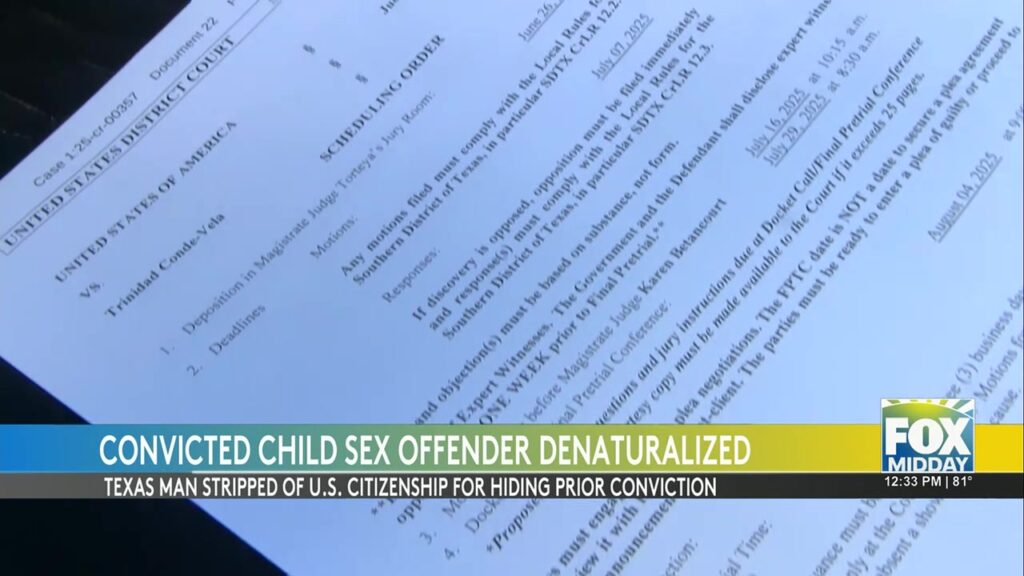
In a recent high-profile legal case, Carlos Noeek Gaiegos, a resident of Texas, has been stripped of his U.S. citizenship after authorities uncovered that he had committed immigration fraud. This denaturalization marks a significant action taken by the U.S. Citizenship and Immigration Services (USCIS) to uphold the integrity of the citizenship process, particularly in matters concerning serious criminal offenses.
The case draws attention to the rigorous standards of honesty and transparency required during the naturalization process, and serves as a strong warning that any deviations from these standards can have severe consequences. Federal authorities emphasize that American citizenship is more than just legal status — it is a privilege that requires adherence to the laws and values of the United States.
Carlos Noeek Gaiegos was initially able to acquire U.S. citizenship by concealing his criminal history, specifically a conviction for sexually assaulting a child. However, further investigations led by various federal agencies, including the USCIS and Immigration and Customs Enforcement's (ICE) Homeland Security Investigations, brought his deception to light. The Southern District of Texas then successfully challenged his citizenship, resulting in its revocation.
Immigration Fraud and Consequences
The case of Carlos Noeek Gaiegos demonstrates the serious implications of committing fraud during the citizenship application process. Misrepresentation or omission of critical information such as a criminal conviction undermines the naturalization process. U.S. citizenship, a coveted status, requires applicants to comply with stringent legal and ethical standards, and any attempt to obtain it through deceit can result in severe actions such as denaturalization.
Federal authorities argue that revoking citizenship due to fraud is crucial for maintaining national security and preserving the country's core values. The successful denaturalization of Gaiegos exemplifies the U.S. government's dedication to preventing individuals from wrongly obtaining the rights and privileges granted to its citizens.
Ongoing Efforts to Ensure Process Integrity
Enforcing the integrity of the naturalization process is an ongoing effort for U.S. immigration authorities. USCIS, in collaboration with ICE's Homeland Security Investigations, continues to monitor and investigate cases of suspected fraud. This case has reinforced the importance of thorough background checks and vigilance in the screening of naturalization applicants.
The commitment from these agencies to uphold the rule of law demonstrates how seriously the U.S. takes the sanctity of its citizenship process. The Gaiegos case highlights the extensive collaboration required between local, state, and federal agencies to address and rectify situations where individuals have acquired citizenship illegitimately.
Impact on Immigration Policies
Cases like that of Carlos Noeek Gaiegos also influence broader immigration policy discussions in the United States. By shining a light on the vulnerabilities and challenges within the naturalization process, they inform and shape future policies aimed at enhancing the security and integrity of the immigration system. These discussions are essential as they balance the openness of the United States to new citizens with the responsibility of ensuring that those who join the national community do so lawfully and with respect for its laws and principles.
The denaturalization also serves as an important case study for policymakers and legal experts as they work to develop more effective safeguards against fraud. It underscores the need for continuous improvements in the handling and evaluation of citizenship applications and demonstrates the repercussions of failing to disclose pertinent information during this process.
Additional Resources
For more information on U.S. citizenship and the naturalization process, visit the official website of the U.S. Citizenship and Immigration Services at uscis.gov. Further resources on the legal implications of immigration fraud can be found through the U.S. Department of Justice at justice.gov.