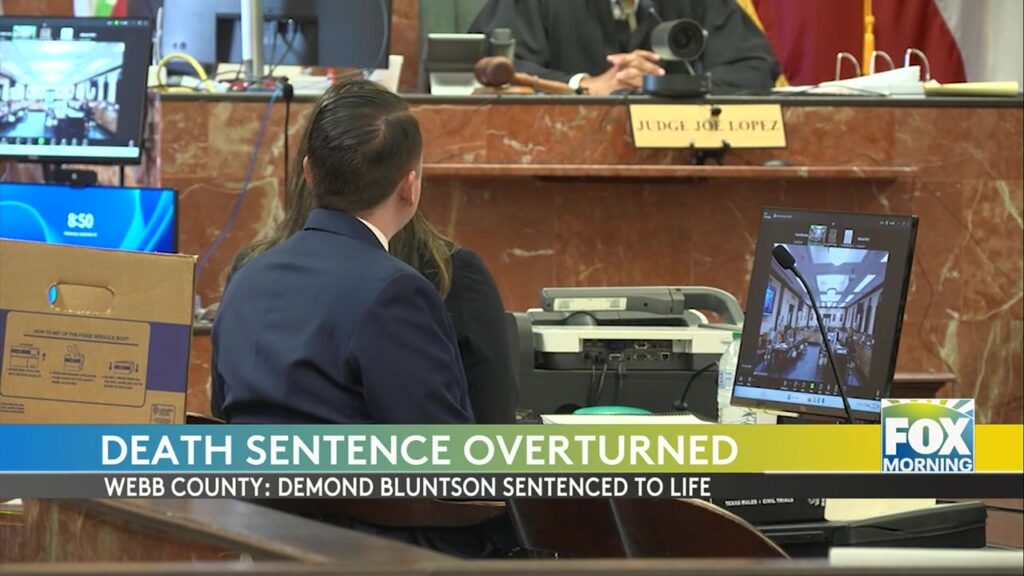
The case of Demon Blenson, a man who was once condemned to death, highlights the profound impact that judicial errors can have on the lives of many involved, from the accused to the victims' families. In a significant legal turn, Blenson saw his sentence reduced from death by lethal injection to life imprisonment. This change was prompted by a critical error on the jury verdict form discovered by the Texas Court of Criminal Appeals, underlining the fallibility and intricacy of the justice system.
In 2016, Demon Blenson was found guilty of the capital murder of Debbie Blenson and Jaden Thompson. The crime sent ripples of grief and anger through the community, and the initial death sentence was seen as a form of closure for some. However, an oversight during the jury's deliberation process led to a mistake in the paperwork, and this clerical error was significant enough to challenge and ultimately change the sentencing outcome.
The discovery of this error raises important questions about the efficacy and thoroughness of the judicial process, especially in cases where the ultimate sentence is death. The decision to commute Blenson's sentence came after thoughtful discussions between the Webb County District Attorney's office and the families of the victims. Amid the complexities of these discussions, a consensus was reached to waive the death penalty, reshaping the course of justice.
Life Over Death: Jury Error in Texas Case
Demon Blenson's reprieve from the death penalty presents a pivotal moment in the annals of Texas legal history. Capital punishment remains one of the most contentious issues within the American judicial system, with Texas historically known for its high rate of executions. Yet, this case demonstrates that even in a state where the death penalty is frequently applied, procedural errors can lead to unexpected outcomes.
The oversight in the jury verdict form was not just a minor detail. It carried the weight of Blenson's fate, shifting his impending execution to life imprisonment without parole. This outcome spurs a broader discussion about the mechanisms in place to safeguard against such critical errors within the justice system.
Legal Oversight and Impact
The involvement of the Texas Court of Criminal Appeals in identifying the error showcases the necessary system of checks and balances within the legal framework. The court's review and decision prompted the Webb County District Attorney to engage with the victims' families to assess the potential to uphold justice while respecting the affected families' concerns.
For the families of Debbie Blenson and Jaden Thompson, the commutation of Demon Blenson's sentence may be perceived as both a relief and a source of lingering discontent. There is no simple resolution when a loved one is lost, and the reduction in Blenson's sentence may complicate their journey toward healing.
Broader Implications
As this case underscores, every step within the judicial process is fraught with the possibility of errors that could drastically alter lives. Vigilance is required to ensure that the outcomes reached are fair, just, and precise. This event also reignites the debate over capital punishment in Texas, prompting reflection on the moral and ethical ramifications of death sentences within modern society.
Is there room for error in a system tasked with dispensing the ultimate form of justice—the power to take a life? The Demon Blenson case suggests that while human systems are inherently flawed, they require constant scrutiny and reform to adapt to the complex moral landscapes they navigate.
Additional Resources
For insights into capital punishment laws, the impact of judicial errors, and ongoing discussions surrounding these topics, visit the Texas Courts' official website at txcourts.gov or the Death Penalty Information Center at Death Penalty Information Center.