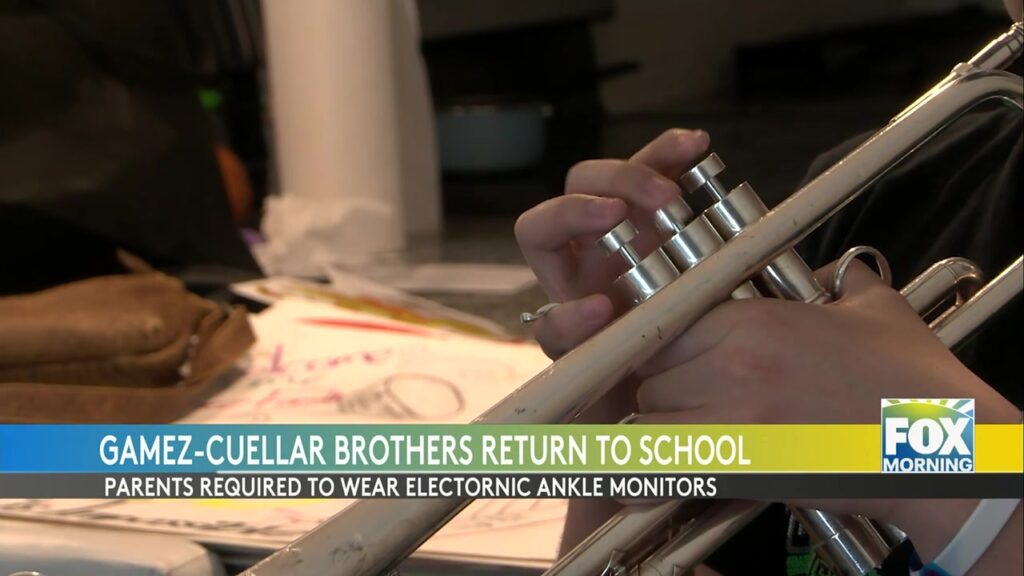
In the Rio Grande Valley, a heartwarming story of resilience and family unity unfolded as the Gamas Guayad family overcame a challenging chapter marked by separation and uncertainty. The return of siblings Antonio, Caleb, and Joshua Gamas Guayad to their classrooms at McAllen High School was not just a passage back to routine but a symbol of hope amidst an ongoing struggle for many immigrant families in the United States.
Their journey back to freedom began with a distressing encounter on February 25th when the family was detained, separating three brothers from their daily lives and thrusting them into a precarious legal and emotional battle. As their case caught the attention of advocacy groups and local leaders, the Gamas Guayad story became a beacon of the trials faced by many in similar circumstances.
The heartfelt reunion was celebrated by their peers and the broader community, with significant attention drawn to the intricate realities of the immigration process. Despite the joyous moment of their reunion, the shadow of immigration proceedings and future uncertainties continues to loom over the Gamas Guayad family, much like it does for countless others navigating the complexities of achieving legal residency or citizenship in the United States.
Advocacy and Release
The involvement of Congressman Joaquin Castro was critical in securing the release of the Gamas Guayad family. During a visit to the detention center, the Congressman personally advocated for their case, recognizing the distress and disruption caused by their situation. His subsequent announcement of their release on social media not only highlighted their plight but underscored the impact that advocacy and political intervention can have on individual cases within the larger framework of immigration enforcement.
Stories like that of the Gamas Guayad family emphasize the important role that community leaders and officials play in addressing immigration issues. Their intervention can often steer the outcome in favor of family unity, providing a lifeline amid bureaucratic and legal hurdles. However, as evident in this case, the road to legal resolution remains fraught with challenges even after initial victories.
Restrictions and Monitoring
Upon their release, Emma Guayada and Luis Antonio Gamas, the parents of Antonio, Caleb, and Joshua, were placed under strict conditions. They are required to wear electronic monitors, which symbolize both freedom and restriction. This surveillance ensures compliance with law enforcement, while also limiting their ability to move freely as they fight for a stable future in the U.S.
The imposition of electronic monitoring is a stark reminder of the lingering uncertainties faced by many undocumented immigrants and their families. It not only impacts their day-to-day lives but also serves as a constant reminder of the tenuous nature of their legal status in the United States. Navigating such restrictions requires both resilience and support from the community.
Impact on the Community
The ordeal of the Gamas Guayad family has resonated throughout McAllen and the wider Rio Grande Valley community, prompting a surge of support and advocacy from local residents and immigration rights groups. The community’s response illustrates the profound empathy and solidarity that small towns often extend towards neighbours in crisis, fostering an environment where collective action can drive meaningful change.
Their case acts as a powerful reflection of broader societal issues surrounding immigration, spotlighting the myriad of challenges faced by those seeking a brighter future in the United States. Additionally, it highlights the importance of community involvement in amplifying the voices of those who might otherwise remain unheard in their pursuit of justice and equity.
Additional Resources
For more information about immigration policies and procedures, and to understand what steps are involved in immigration cases similar to that of the Gamas Guayad family, visit uscis.gov.