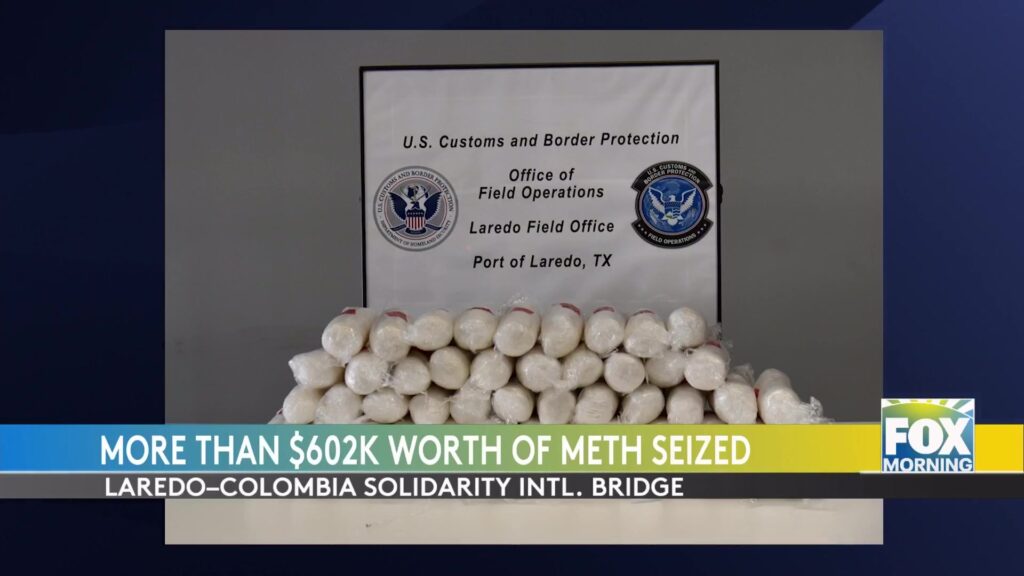
U.S. Customs and Border Protection (CBP) officers have once again demonstrated their commitment to national security with a significant interception of illegal drugs. Recently, officers apprehended over 65 pounds of methamphetamine, valued at more than $600,000, during a secondary inspection at the Columbia-Solidarity International Bridge, a critical point of entry between the United States and Mexico. This successful apprehension underscores the agency's unwavering vigilance and its crucial role in curbing drug smuggling operations.
The Columbia-Solidarity International Bridge, located near Laredo, Texas, is a vital artery not only for legitimate trade but also a target for illicit activities. As a joint project between the United States and Mexico, this bridge facilitates commerce but also necessitates stringent security measures. CBP officers are tasked with the challenging job of balancing efficient trade flow with safeguarding borders against the influx of illegal substances.
This latest seize reflects the ongoing challenges faced by border security officials and highlights the lengths taken by cartels to innovate their smuggling tactics. As these methods evolve, so too does the CBP's arsenal of detection strategies and technologies to combat drug trafficking effectively.
A Growing Epidemic: The Methamphetamine Crisis
Methamphetamine continues to be a significant scourge across the United States, affecting countless communities with its highly addictive properties and destructive personal and societal impacts. The drug’s potent effects, coupled with its relatively low production costs, make it an attractive option for illicit organizations seeking profits at the expense of public health.
As reports of methamphetamine abuse rise, the consequences ripple through both urban and rural areas, leading to increased crime rates, overburdened healthcare systems, and fractured families. The epidemic is pervasive and requires a consolidated effort from federal, state, and local agencies to address not only the supply side but also to offer support and rehabilitation for individuals suffering from addiction.
CBP's Enhanced Strategies
In response to the sophisticated methods used by drug traffickers, the CBP has adopted a multifaceted strategy to strengthen border security. This includes deploying state-of-the-art technology for scanning and detecting concealed narcotics. Tools like non-intrusive inspection equipment, advanced surveillance, and canine units form the backbone of their operations at points of entry.
Moreover, CBP has focused on refining its intelligence operations and inter-agency cooperation. By fostering relationships with other law enforcement and international agencies, CBP can intercept contraband more effectively and dismantle smuggling networks.
Training and staff development are also integral to CBP's mission, ensuring officers are equipped with the knowledge and skills to address emerging threats. Continuous intelligence analysis and sharing foster an environment where prevention of such incidents is more likely, enhancing community safety and well-being.
Moving Forward: Continued Vigilance
The battle against methamphetamine smuggling is a continuous one, and CBP's recent seizure is a reminder of the obstacles still to overcome. Ensuring security at borders without impeding legitimate travel and trade remains a delicate balance. Yet, as the tactics of traffickers advance, so too must the methods of those who guard against them.
Community involvement and support are crucial elements in the fight against drug trafficking. Educating the public on the dangers of methamphetamine and promoting recovery programs directly address the demand side of the drug trade, complementing CBP's efforts against supply.
As policies and technologies evolve to keep pace with modern smuggling threats, so does the hope for a future where drug plagues such as methamphetamine no longer hold sway over communities.
Additional Resources
For more detailed information on methamphetamine, its effects, and available support, consider visiting resources like the Substance Abuse and Mental Health Services Administration or the CDC’s Drug Overdose Page. These sites offer valuable insights, resources, and support for individuals and communities dealing with the impact of drug addiction.